The Future of Arts and Culture in Philadelphia
Abstract
One of the great things about Philadelphia's current artistic climate is that multiple voices are able to co-exist here within and through various disciplines, such as theatre, music, dance, fine art or community-based projects, collectively reaching just about everyone, regardless of class, culture or creed. This is achieved through an array of artistic offerings like Philadanco (The Philadelphia Dance Company), the annual Philadelphia Film & Philadelphia Gay and Lesbian Film festivals, the Philly Fringe/Live Arts Festival, the Walnut Street Theatre, the Kimmel Center, and the incredible citywide Mural Arts Program, to name only a few.
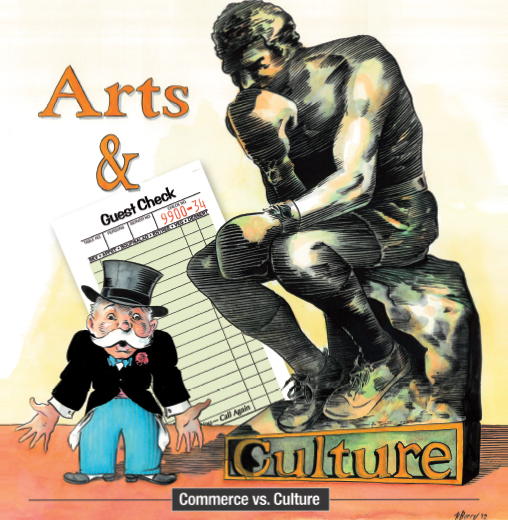
As a local artist, I have the opportunity to experience Philadelphia's art and culture scene both as a player and a patron. Lately I've come to notice, from both sides of the fence, that the arts are inextricably tied to economy and commerce today more than ever. Our struggling economy not only has far-reaching economic significance but has social and cultural effects that could potentially have a long-term negative impact on our communities nationwide. This is especially true for the city of Philadelphia; with unemployment in Philadelphia County over 10 percent at the time of this article’s writing (Bureau of Labor Statistics 2012) and our troubled history of violence, a poor economy could potentially make a bad situation much worse.
The immediate fall-out from the downturned economy can be easily seen. Established institutions like the Philadelphia Orchestra filing for bankruptcy, for example (Wakin 2011). Everyone, from music venues to museums to theatres to the opera, is offering discounts on ticket prices. Yet, patrons still struggle to afford them. A day or evening of art and culture is becoming more of a luxury rather than part of one's lifestyle.
Despite all of this, there are other surface indications that the arts and culture scene is thriving and, in some ways, that's true. Almost daily I encounter young graduates from the city's various liberal arts universities, colleges and training facilities who are choosing to remain in Philadelphia as opposed to going to New York, Chicago or Los Angeles to start their careers. Several new theatre companies have started or raised their profile within the last 2 years and are doing well (i.e., Philadelphia Artist Collective, Quintessence, GoKash Productions). Six up-from-their-bootstraps theatre companies were recently able to make that leap from small, struggling entities to players in the Philadelphia theatre community by coming together and forming the Off-Broad Street Theatre Consortium (Cofta 2011). Venues and organizations like the Kimmel Center, the Pennsylvania Ballet, the Opera Company of Philadelphia, and the Philadelphia Pops have seemingly been able to maintain high production values.
However, the more realistic picture shows artistic entities of all sizes scrambling to develop new marketing strategies, and perhaps even revamping their mission statements or searching for ways to "re-brand" or make themselves over. There is strong competition for shrinking patron and government dollars in an effort to survive this economy when so many organizations have not (Anderson 2009). Theatres, in particular, have been forced to cut back on the cost, size and number of shows produced. They have had to become more creative in their approaches to maintaining their subscription base as well as the cultivation of new patrons, all with less money in their budgets. Most artistic nonprofits rely heavily on some sort of government or private grant as a significant part of their operating budgets. Oftentimes, these grants are the only way of funding the community-based component of that organization’s initiative. Losing any or all of that financial support can be extremely damaging to the community-based programming of most arts organizations.
Unfortunately, the loss of this type of outreach causes a negative social and cultural backlash that reverberates within our local communities. Statistics show that cuts in arts education have gone hand in hand with an increase in crime (Backstrom 2011). Conversely, studies have shown that there is a direct correlation between the implementation of community-based arts programming and the decrease in crime over time (Steurer 2003). Similar studies also show that arts and arts education in the schools (K-12) improve test scores (Patton 2011) and lead to positive outcomes related to prosocial development and academic achievement (Silbert 2001)
Downloads
Published
How to Cite
Issue
Section
License
Copyright (c) 2012 Kaci M. Fannin (Author)

This work is licensed under a Creative Commons Attribution-NonCommercial-NoDerivatives 4.0 International License.
The Social Innovations Journal permits the Creative Commons License:
CC Attribution-NonCommercial-NoDerivatives 4.0
Under the following terms:
-
Attribution — You must give appropriate credit, provide a link to the license, and indicate if changes were made. You may do so in any reasonable manner, but not in any way that suggests the licensor endorses you or your use.
-
NonCommercial — You may not use the material for commercial purposes.
-
NoDerivatives — If you remix, transform, or build upon the material, you may not distribute the modified material.
- No additional restrictions — You may not apply legal terms or technological measures that legally restrict others from doing anything the license permits.
Notices:
- You do not have to comply with the license for elements of the material in the public domain or where your use is permitted by an applicable exception or limitation.
- No warranties are given. The license may not give you all of the permissions necessary for your intended use. For example, other rights such as publicity, privacy, or moral rights may limit how you use the material
Copyright and Publishing Rights
For the licenses indicated above, authors retain the copyright and full publishing rights without restrictions.