Archives - Page 4
-

Issue 23 | Spring 2015
No. 23 (2015)Dear Reader, Philadelphia’s population continues to grow for the seventh consecutive year after decades of decline, yet Philadelphia has the highest poverty rate of the ten largest U.S. cities. Twenty-eight percent (28%) of Philadelphians — between 430,000 and 440,000 people — live below the federal poverty level, including 39% (135,000) of children, 27% (265,000) of working-age adults and 17% (32,000) of seniors (link). Philadelphia also has an alarmingly high rate of “deep” poverty — people with incomes below half of the poverty line. Philadelphia’s deep poverty rate is 12.2 % (link), or nearly 185,000 people including 60,000 children, nearly twice as high as the U.S. deep poverty rate of 6.3%. , By definition, a family of three living in deep poverty would have an income of approximately $10,000 annually, half the poverty rate of $20,000 for a family that size. It is widely believed that the root cause of deep poverty is “people unable to get jobs for one reason or another,” according to Roberta Iversen, a University of Pennsylvania expert on low-income families. “They can't work for reasons of depression, disability or lack of jobs.” While Philadelphia has made strides in raising the four-year high school graduation rate, achievement still lags behind state and national averages, and lower levels of education are strongly correlated to poverty (link). The previous Philadelphia Social Innovations Journal edition focused on Philadelphia’s low literacy rate, making the connection that the root cause of un- and underemployment is our low literacy rates. We know that the effects of poverty extend beyond the individual – lost tax revenue, increased tax burdens and deterring new businesses from coming to Philadelphia, which creates jobs and income earners. The Philadelphia Social Innovations Journal (PSIJ), in partnership with the Corporation for National and Community Service, the Mayor’s Office of Community Empowerment and Opportunity, and the Knight Foundation, is pleased to offer this 23rd edition recognizing 50 years of AmeriCorps VISTA antipoverty work and celebrating the Anti-Poverty Solutions Spotlight Summit to launch 50 more years of solutions. All Philadelphians should have a vested economic interest, if not a moral imperative, to fight poverty. Our city’s alarming poverty rates diminish quality of life, and tarnish our city’s reputation as a vibrant, thriving place to live, work and play. In this edition, you will read about solutions and impact through targeted AmeriCorps VISTA investments. Our objective with this edition is to set the stage for 50 more years of improvement and to rally all Philadelphians to work together and bring hope to the 28% of adults and children in Philadelphia living in poverty. Our goal is to scale successful anti-poverty models to reach more of our city’s poor population. The time to innovate is now. By the year 2030, 600,000 Philadelphians (nearly 39% of the current total population) will not have skills needed to secure the types of jobs available in Philadelphia. Specifically, jobs in education and the health services have increased 18% in the last ten years and 12 of Philadelphia’s 15 largest employers in 2012 were in the education and health sectors. The jobs in these sectors require skills and higher education or post-secondary training, which many Philadelphians lack (link). As always, we thank our sponsors, whose support is essential to what we do. We also want to recognize and thank our advisory board members, representing the Barra Foundation, Bank of America, Claneil Foundation, Green Tree Community Health Foundation, Independence Foundation, Inglis Foundation, Knight Foundation, The Patricia Kind Family Foundation, The Philadelphia Foundation, The Public Health Fund, Public Health Management Corporation, Sage Communications, Scattergood Foundation, St. Christopher’s Foundation for Children, United Way of Greater Philadelphia and Southern New Jersey, and the University of Pennsylvania. Very truly yours,Nicholas Torres, Co-Founder
Tine Hansen-Turton, Co-Founder -

Issue 22 | Winter 2015
No. 22 (2015)Dear Reader, While Philadelphia is in many ways a thriving, vibrant city, education opportunities are not equally accessible to all of our children. More than half (51%) of Philadelphia’s 13,855 public school third-graders cannot read at grade level, and more than 500,000 adults have low literacy skills, preventing them from even completing a job application. The Philadelphia Social Innovations Journal (PSIJ) in partnership with the Philadelphia Public School Notebook is very pleased to publish a special edition on literacy, highlighting the ambitious READ! by 4th Campaign (Ready, Engaged, Able and Determined by 4th Grade). We have joined forces with READ! by 4th Campaign leaders, including the Free Library of Philadelphia, Public Citizens for Children and Youth, the Urban Affairs Coalition, the School District of Philadelphia, and the Mayor’s Commission on Literacy, as well as United Way of Greater Philadelphia and Southern New Jersey. This special edition highlights the challenges and opportunities facing Philadelphia education stakeholders, and explores Philadelphia’s best opportunities to ensure that all Philadelphia children can read by fourth grade. The innovations in literacy issue is particularly personal to us because Tine has a teenage son, Nikolaj, who is severely dyslexic and has been fortunate to go to AIM, a wonderful private school that specializes in educating children with dyslexia and that has been a game-changer in his education trajectory and is also featured in this edition. Nick’s mother has dedicated her life to educating students who do not succeed or are marginalized in traditional educational settings. She has taught the foundations of reading using an evidence-based approach to hundreds of dyslexic children for 40 years. She has personally witnessed the struggles and frustrations students face if they cannot read, as well as the magic that happens in their personalities when they are taught using a modality that works. Nick himself was a slow reader and would most likely not have achieved his success today if he did not have his mother to teach him how to read using this approach outside of the a traditional school setting. Both of us are well aware that it is hard, if not impossible, for most non-specialized schools to provide the level of intense support and tutoring that is needed for children with literacy-based learning challenges to learn how to read. And because of that, we cofounded the first public school in 2012 that specializes on children with learning challenges, such as dyslexia and dyscalculia, called Education Plus Academy Cyber Charter School. Education Plus Academy’s mission was to create a publically funded model/product that could either be adopted by public schools and districts or put directly into the hands of teachers and parents who are asking for a guide on how to help children with learning disabilities/differences master the foundations of reading. In this edition, you will read about the challenges the literacy campaign will face and how stakeholders and experts are providing innovative solutions to a literacy epidemic that in many ways could cripple the future of Philadelphia. Our specific goal for this edition is to provide hope to the parents of children with literacy challenges, learning differences or disabilities who are struggling with the foundations of reading. There are many models that work for children, and all children are capable of reading. The challenge that schools and districts struggle with is how to take these models and ensure that teachers understand them and then teach them with fidelity. This edition will provide you the reader with the literacy challenges and opportunities and an idea of what is currently being implemented within and outside of schools, with the goal of ensuring that all Philadelphia students can read. As always, we thank our sponsors, whose support is essential to what we do. We also want to recognize and thank our advisory board members, who represent the Barra Foundation, Bank of America, Claneil Foundation, Green Tree Community Health Foundation, Independence Foundation, Inglis Foundation, Knight Foundation, The Patricia Kind Family Foundation, The Philadelphia Foundation, Public Health Foundation, Public Health Management Corporation, Sage Communications, Scattergood Foundation, St. Christopher’s Foundation for Children, United Way of Greater Philadelphia and Southern New Jersey, and the University of Pennsylvania. Very truly yours,Nicholas Torres, Publisher
Tine Hansen-Turton, Publisher -

Issue 21 | Special Edition | Winter 2014
No. 21 (2014)Dear Reader, The Philadelphia Social Innovation Journal is collaborating with Wharton-QS Stars Reimagine Education 2014 to highlight the best pedagogical innovations around the world in this Special Holiday Mini Edition. Within higher education there is a deep drive towards sharing innovative ideas and successful approaches to teaching in this ever changing sector. The inaugural conference of the Wharton-QS Stars Reimagine Education Awards 2014 strived to do just that. The initiative, created by a collaboration between the University of Pennsylvania Wharton School SEI Center for Advanced Studies in Management, and QS Quacquarelli Symonds, aims to not only award those programs around the world that have gone above and beyond the normal higher education experience, but Reimagine Education also serves to bring together global academics to share best practices, and brainstorm new efforts. The Reimagine Education Awards were held in early December. Over 400 applications from 43 nations were received. The projects were judged in multiple rounds by a distinguished international panel on a number of elements including approach, impact on student, engagement and scalability. This special collaborative holiday mini issue of Philadelphia Social Innovation Journal will feature the 2014 Reimagine Education winners, as well as information on the best higher education innovations found in this worldwide search. We want to thank the Wharton-QS Stars Reimagine Education Awards for their collaboration on this mini holiday edition and as always, we thank our sponsors and our advisory board members. The Philadelphia Social Innovations Journal looks forward to bringing you editions in 2015 focused on innovations with regard to literacy challenges, partnerships from collaborations to mergers, poverty innovations in partnership with the Corporation for National and Community Service and much more. We hope you have a wonderful holiday season and happy New Year. Very truly yours, Tine Hansen-Turton, Co-founder Nicholas Torres, Co-founder -

Issue 20 | Winter 2014
No. 20 (2014)Dear Reader, Philadelphia’s nonprofit sector is substantial, diverse and growing. Over 2,100 public charities reside within the City boundaries, which collectively represent revenues totaling over $20 billion annually. Philadelphia is home to some of the world’s top hospitals, universities and research institutions. Social services constitute the largest group of Philadelphia’s nonprofits with more than 600 organizations dedicated to helping others. Philadelphia boasts world-class museums, historic sites of national importance, an award winning performing arts community and a burgeoning creative community that is sparking neighborhood revitalization. These vibrant neighborhoods, anchored by more than 270 commercial corridors, are critically important to the economic growth and development of the City and the continued growth of these neighborhoods provide the opportunity for innovative solutions to address many of the communities’ needs. We are pleased to bring our 20th Edition of the Philadelphia Social Innovations Journal (PSIJ) titled The Philadelphia Region’s Nonprofits & Innovations in Economic Development in partnership with Philadelphia Industrial Development Corporation (PIDC) and Public Health Management Corporation (PHMC). In this edition, experts in the field highlight innovative projects where Philadelphia’s nonprofits are leading the way through creative financing structures, partnerships with for-profit entities and initiatives that have impact beyond their immediate mission. As always, we thank our sponsors, whose support is essential to what we do. We also want to recognize and thank our advisory board members, representing the Barra Foundation, Bank of America, Green Tree Community Health Foundation, Independence Foundation, Independence Blue Cross Foundation, Inglis Foundation, Knight Foundation, The Patricia Kind Family Foundation, The Philadelphia Foundation, Public Health Foundation, Public Health Management Corporation, Sage Communications, Scattergood Foundation, St. Christopher’s Foundation for Children, United Way of Greater Philadelphia and Southern New Jersey, the University of Pennsylvania, Wells Fargo and the William Penn Foundation.Very truly yours,
Nicholas Torres, Publisher
Tine Hansen-Turton, Publisher -

Issue 19 | Summer 2014
No. 19 (2014)Dear Reader,Perhaps no social issue receives more attention than the safety, health and positive development of children. Addressing this issue are the thousands of organizations around the country providing services to youth of all ages during the summer, after school, and evening hours, also known as out of school (OST) time. Hundreds of research articles demonstrate many different types of programmatic best practices. OST programs do much more than merely ensure the safety of children from the time they are dismissed from school until the time that they can be supervised by a parent or guardian; they also build essential, modern and relevant skills such as critical thinking and collaboration; they promote positive social values; and they support youth in making educational gains to ensure that they are competitive in a global workforce. Yet, very few OST programs have brought these practices to a significant scale.
The Philadelphia Social Innovations Journal, along with the City of Philadelphia Department of Human Services (DHS), Philadelphia Parks and Recreation (PPR), the DHS-funded OST Project managed by Public Health Management Corporation, The Philadelphia Foundation, Research for Action and several DHS OST funded providers will explore the many innovations within Philadelphia's OST network and regional OST programs. These OST models have demonstrated significant social impact on children and youth, including educational outcomes. The Pennsylvania Statewide Afterschool Youth Development Network (PSAYDN), the Afterschool Alliance and Every Hour Counts will present information on national and regional trends, promising practices, and policy issues.
As always, we thank our sponsors and our advisory board members, representing the Barra Foundation, Bank of America, Green Tree Community Health Foundation, Independence Foundation, Independence Blue Cross Foundation, Inglis Foundation, Knight Foundation, The Patricia Kind Family Foundation, The Philadelphia Foundation, Public Health Foundation, Public Health Management Corporation, Sage Communications, Scattergood Foundation, St. Christopher’s Foundation for Children, United Way of Greater Philadelphia and Southern New Jersey, the University of Pennsylvania, Wells Fargo and the William Penn Foundation.
Very truly yours,
Nicholas Torres, Publisher
Tine Hansen-Turton, Publisher -

Issue 18 | Spring 2014
No. 18 (2014)Dear Reader,The implementation of the Affordable Care Act (ACA) and The Paul Wellstone and Pete Domenici Mental Health Parity and Addiction Equity Act of 2008 (MHPAEA) place mental health, for the first time, at the forefront of healthcare financing issues in parity with prevention and primary healthcare. For many years there has been a separation of the mind from the body, both from a philosophical and practice perspective. This division has led to a dichotomy in care provided to individuals with behavioral and physical health needs (whether recovery or treatment models), in addition to payment methods for services received. Yet, mental health constitutes a major chronic illness and a significant healthcare expenditure totaling more than $125 billion in federal dollars a year (not counting some level of private and commercial dollars). Many suggest that there are serious dysfunctions in both systems and that the new integration of primary care and behavioral health may present answers in assuring a more responsive and coherent system of care. We're facing a moment of opportunity and we propose to explore the realities, challenges and opportunities.
We are pleased to bring our 18th Edition of the Philadelphia Social Innovations Journal (PSIJ) titled “What's the Future of Behavioral Health in Light of the Disruptive Innovation of Healthcare Reform?” in partnership with Public Health Management Corporation, the Thomas Scattergood Foundation, City of Philadelphia Department of Behavioral Health and Intellectual disAbility Services, Beck Institute of Cognitive Therapy and Open Minds.
In this edition PSIJ takes a closer look at how both the behavioral and physical health systems under broad healthcare reform will need to adjust to become integrated. You will hear from national and regional behavioral health experts, innovators, leaders and policy makers who write about the challenges and opportunities for innovation that will come along with this broader health paradigm shift.
As always, we thank our sponsors, whose support is essential to what we do. We also want to recognize and thank our advisory board members, representing the Barra Foundation, Bank of America, Green Tree Community Health Foundation, Independence Foundation, Independence Blue Cross Foundation, Inglis Foundation, Knight Foundation, The Patricia Kind Family Foundation, The Philadelphia Foundation, Public Health Foundation, Public Health Management Corporation, Sage Communications, Scattergood Foundation, St. Christopher’s Foundation for Children, United Way of Greater Philadelphia and Southern New Jersey, the University of Pennsylvania, Wells Fargo and the William Penn Foundation.
Very truly yours,
Nicholas Torres, Publisher
Tine Hansen-Turton, Publisher -

Issue 17 | Winter 2014
No. 17 (2014)Dear Reader,Legislation and parental demand have pushed the United States education system to evolve and have challenged traditional educational models. The advancement of virtual educational software and universal student access to information is challenging every type of school (co- op, home school, district, charter, private) to rethink how students learn and how curricula is delivered. Blended learning in all types of schools has created an opportunity for every student to have an individualized learning path based upon his or her academic levels, and has opened the door for transparency and accountability between schools and families.
We are very pleased to bring you our 17th Edition of the Philadelphia Social Innovations Journal (PSIJ) titled “New School Designs and Innovative Educational Models” in partnership with The School District of Philadelphia, Clayton Christensen Institute for Disruptive Innovation, the International Association for K-12 Online Learning, Bravo Group and Public Health Fund.
In this edition PSIJ takes a closer look at new school designs in education along with programmatic, philosophical and policy challenges and opportunities that come along with new innovations in education. You will hear from national and regional education and social sector innovators, leaders and policy makers who write about the regional and national landscape of, and appetite for, new school design and innovative educational models to improve academic outcomes for Pennsylvania children and beyond.
Please plan to join us on Tuesday, April 1, 2014 from 8:00 a.m. to noon at WHYY in Philadelphia for our rescheduled launch event. Click here to register.
As always, we thank our sponsors, whose support is essential to what we do. We also want to recognize and thank our advisory board members, representing the Barra Foundation, Bank of America, Green Tree Community Health Foundation, Independence Foundation, Independence Blue Cross Foundation, Inglis Foundation, Knight Foundation, The Patricia Kind Family Foundation, The Philadelphia Foundation, Public Health Foundation, Public Health Management Corporation, Sage Communications, Scattergood Foundation, St. Christopher’s Foundation for Children, United Way of Greater Philadelphia and Southern New Jersey, the University of Pennsylvania, Wells Fargo and the William Penn Foundation.
Very truly yours,
Nicholas Torres, Publisher
Tine Hansen-Turton, Publisher -

Issue 16 | Winter 2013
No. 16 (2013)Dear Reader,We are very pleased to bring you our Mini 16th Edition of the Philadelphia Social Innovations Journal (PSIJ). All the articles in this edition were nominated by you, the readers of the Journal.
As our calendar year is coming to an end, the Journal is rounding out its 4th anniversary. During this time of year we tend to take stock of the past and look to the future. Because of your support the Journal has produced 16 editions, developed a distribution list of tens of thousands individuals, had several million hits to the website and thousands of individuals have attended our events. In addition to the editions of the Journal, we have amassed an advisory committee of supporters and created a Social Innovation Lab in partnership with the Fels Institute of Government.
The release of this Mini Edition is a special one as it represents the core of what the Journal is about. The edition itself is solely comprised of nominations from our audience and all have been written by members of our Nominate and Innovator Team. It is being launched at what has become an annual holiday party for our audience, which is following another round of unveilings of visionary initiatives from this semester’s Social Innovation Lab. Growing and appreciating our audience and supporters; relying on the community to determine ‘innovation’; providing a space where innovations not covered in the mainstream media can be highlighted; developing the next generation of leaders; building the capacity of innovative initiatives and bringing the social innovation sector together = Philadelphia Social Innovations Journal.
The Journal is committed to adhering to and advancing these principals as it looks to 2014 and beyond.
Through this special edition, we thank our audience, students of the Social Innovations Lab, the Nominate an Innovator Team, and the many other committed volunteers who make the Journal run.
As always, we thank our sponsors, whose support is essential to what we do. We also want to recognize and thank our advisory board members, representing the Barra Foundation, Bank of America, Green Tree Community Health Foundation, Independence Foundation, Independence Blue Cross Foundation, Inglis Foundation, Knight Foundation, The Patricia Kind Family Foundation, The Philadelphia Foundation, Public Health Foundation, Public Health Management Corporation, Sage Communications Scattergood Foundation, St. Christopher’s Foundation for Children, United Way of Greater Philadelphia and Southern New Jersey, the University of Pennsylvania, Wells Fargo and the William Penn Foundation.
We hope you will enjoy this edition and wish you all a safe and happy holiday season.
See you in 2014 for more engaging editions and thought provoking events.
Very truly yours,
Nicholas Torres, Publisher
Tine Hansen-Turton, Publisher
Keri Salerno, Chair, Nominate an Innovator Team -

Issue 15 | Fall 2013
No. 15 (2013)Dear Reader,In partnership with the City of Philadelphia Office of the Managing Director and the University of Pennsylvania Fels Institute of Government, we are very pleased to bring you our Fall 2013 edition of the Philadelphia Social Innovations Journal (PSIJ), titled "Social and Public Innovations: A Look at How Philadelphia and Regional Government Innovates framed within a National Context."
In recent years, Philadelphia government has become known as the hub for social and public innovations, especially in the education, social, medical and technology sectors. What accounts for the successes (or failures) of these government innovations? In this edition we explore through case examples how Philadelphia and its regional government is innovating and leading large urban cities. In reading this edition, readers will learn "the secret sauce" of what it takes to innovate and successfully partner as a social innovator in and with government. Specifically, this edition will focus on:
- Regional public-sector-driven social innovations;
- Social innovation in the context of local social service delivery systems dominated by government dollars and rules;
- How nonprofit and private-sector social entrepreneurs and innovators can engage, rather than avoid, government as part of their mandates, visions and theories of change; and
- Leadership strategies that overcome the stumbling blocks and barriers—whether cultural, political or bureaucratic—that are holding back the progress that social innovation promises.
A special thanks to Rich Negrin, City of Philadelphia Managing Director, and Keri Salerno, Chair of the PSIJ Nominate an Innovator volunteer team, for providing the strategy and vision behind this edition. As always, we also want thank our Journal advisory board members and funders representing the Barra Foundation, Bank of America, Green Tree Community Health Foundation, Independence Foundation, Independence Blue Cross Foundation, Inglis Foundation, Knight Foundation, The Patricia Kind Family Foundation, The Philadelphia Foundation, Public Health Foundation, Public Health Management Corporation, Sage Communications Scattergood Foundation, St. Christopher’s Foundation for Children, United Way of Greater Philadelphia and Southern New Jersey, the University of Pennsylvania, Wells Fargo and the William Penn Foundation.
We hope this edition will give you insight and a framework for how government innovates, and to quote Michael Bloomberg: "America has never met a problem it couldn’t fix or a challenge it couldn’t meet… But too often we are held back by the very systems that were designed to address these problems… if we are going to emerge from these challenging times … we need to reinvigorate government with the spirit of innovation…"
Very truly yours,
Nicholas Torres, Publisher
Tine Hansen-Turton, Publisher -

Issue 14 | Summer 2013
No. 14 (2013)Dear Reader:In partnership with Social Innovation Exchange (SIX), we are very pleased to bring you our Spring/Summer 2013 edition of the Philadelphia Social Innovations Journal (PSIJ), titled “The Next Generation Redefining the Global Workforce.” PSIJ is very excited to partner with SIX, as it is the world's primary network for social innovation and a reputable source for research, action and intelligence on social innovation.
One only needs to pick up our local newspaper or business journal or see the headlines on Google to recognize that we are facing a global education and workforce crisis. Our young people are not getting jobs and our educational systems are not preparing them for the work that the global labor market demands. In this edition, we invite you to learn from readers and organizations from across sectors and around the globe as they share their best practices and global innovations with the collective desire to accelerate innovation to meet the needs of a changing global marketplace.
Regional, national and global innovators will share information and discuss ideas about promising projects underway or in the pipeline that address the following:
- How do we create new economies across sectors that result in new jobs for younger people?
- How do we innovate across the global labor market systems?
- How do we create new job markets that support self-employment and develop new, more effective ways of linking individuals to work?
And that answer some of the tough questions:
- Are new employment economies driven by innovation/social innovators or established institutions and the public sector?
- What are high schools and higher education institutions doing to help young people prepare for new economies?
A special thanks to Steve Wray from the Economy League of Greater Philadelphia for being a sponsor and helping us think through this edition and the launch event, and to the Independence Foundation, United Way of Greater Philadelphia and Southern New Jersey, Public Health Management Corporation, Eisenhower Fellowships, Impact Philadelphia, Education-Plus, Inc. and Dr. Elizabeth Polizzi for helping to sponsor the edition and launch event.
As always, we want thank our other Journal advisory board members and funders, including the Scattergood Foundation, United Way of Greater Philadelphia and Southern New Jersey, The Philadelphia Foundation, Public Health Foundation, Public Health Management Corporation, Independence Blue Cross Foundation, Green Tree Community Health Foundation, Independence Foundation, St. Christopher's Foundation for Children, Inglis Foundation, Barra Foundation, Knight Foundation, Bank of America, The Patricia Kind Family Foundation, Wells Fargo, Sage Communications, William Penn Foundation and the University of Pennsylvania.
It is not the first time PSIJ has addressed the issue of workforce and education innovations. To download our past edition on regional education innovations, please click here. The reason we continue to focus on this topic is that the need to redefine the Global Workforce is an issue we all will have to grapple with in the decades to come to assure we have a vibrant regional and global future. We hope The Next Generation Redefining the Global Job Market will inspire you to help accelerate the innovation needed to meet the needs of our changing global marketplace and its evolving young workforce.
Very truly yours,
Nicholas Torres, Publisher
Tine Hansen-Turton, Publisher -
Issue 13 | Spring 2013
No. 13 (2013)Dear Reader:In partnership with United Way of Greater Philadelphia and Southern New Jersey, Delaware Valley Grantmakers, Public Health Management Corporation, The Philadelphia Foundation, the Greater Philadelphia Chamber of Commerce and Graham Company, we are very pleased to bring you our Winter 2013 edition of the Philadelphia Social Innovations Journal (PSIJ), titled “Innovations in Regional Partnerships for Strategic Growth: From Collaborations to Mergers.”
Our world is changing and future success will be defined and dominated by strategic alignments and partnerships. Innovation that creates social change and impact requires us to abandon our silos and fears, and to learn to create new partnerships. In this edition, you will learn from national and regional leaders and colleagues about the critical role strategic alignments and partnerships play in advancing the social sector and its impact. The articles range from successful community grassroots collaborations to full-blown mergers. Each article not only focuses on the formation of the strategic alignment/partnership, but on the courage—and the risks— it took to create a future and have a greater impact.
In today’s environment, we encounter strategic partnerships every day. In fact, PSIJ is an example of an idea, born out of a partnership between the two of us, that has evolved to several social joint ventures. The impossible becomes possible when a partnership is formed. We hope you’ll take the lessons shared in this edition and apply it to your own world.
We want thank our other Journal advisory board members and funders, including the Scattergood Foundation, United Way of Greater Philadelphia and Southern New Jersey, The Philadelphia Foundation, Public Health Foundation, Public Health Management Corporation, Independence Blue Cross Foundation, Green Tree Community Health Foundation, Independence Foundation, St. Christopher's Foundation for Children, Inglis Foundation, Barra Foundation, Knight Foundation, Bank of America, The Patricia Kind Family Foundation, Wells Fargo, Sage Communications and the University of Pennsylvania.
A special thanks to Romana Lee-Akiyama from United Way of Greater Philadelphia and Southern New Jersey, Debra Kahn and Ashley Feuer-Edwards from Delaware Valley Grantmakers, Ana Lisa Yoder from The Philadelphia Foundation, and Chermaina Roundtree from the Greater Philadelphia Chamber of Commerce for planning this partnership edition with us.
We hope you will enjoy this edition and find the kind of useful information that will inspire you to partner with likeminded organizations to create greater community impact.
Very truly yours,
Nicholas Torres, Publisher
Tine Hansen-Turton, Publisher -

Issue 12 | Winter 2012
No. 12 (2012)Dear Reader:We are very pleased to bring you our Mini 12th Winter Edition of the Philadelphia Social Innovations Journal (PSIJ). All the articles in this edition were nominated by you, the readers of the Journal.
When we first conceptualized the Journal, our intent was to highlight innovations happening in and around the Philadelphia region; what better way for us to learn about innovations than through the Journal’s audience? Hence, the Nominate an Innovator section was born.
We encourage all of you to go to the Journal’s website and nominate an organization, initiative, partnership or individual you believe is innovative and worthy of publication in the Journal. A team of wonderful volunteers leads our Nominate an Innovator process. This nomination process, like the Journal as a whole, has community and volunteerism at its core. Everyone involved with the Journal is a volunteer. With no one individual or group having ownership, it is truly the community’s.
The Nominate an Innovator Team is a group of young professionals, led by Keri Salerno, committed to the non-profit, public, academic and philanthropic sectors. It is their responsibility to form teams among themselves and to write articles about your nominations, as well as to take on various tasks to ensure the work of the Journal gets done.
Through this special edition, we thank the Nominate an Innovator Team, and the many other committed volunteers who make the Journal run.As always, we thank our readers and our sponsors, whose support is essential to what we do. We also want to recognize and thank our advisory board members, including the Scattergood Foundation, United Way of Southeastern Pennsylvania and New Jersey, The Philadelphia Foundation, Public Health Foundation, Public Health Management Corporation, Independence Blue Cross Foundation, Green Tree Community Health Foundation, Independence Foundation, St. Christopher's Foundation for Children, Inglis Foundation, Barra Foundation, Knight Foundation, Bank of America, The Patricia Kind Family Foundation, Wells Fargo, Sage Communications, and University of Pennsylvania.
We hope you will enjoy this edition and wish you all a safe and happy holiday season.
See you in 2013 for more engaging editions, thought provoking events, and some other surprises in store for our Journal family!
Very truly yours,
Nicholas Torres, Publisher
Tine Hansen-Turton, Publisher -

Issue 11 | Fall 2012
No. 11 (2012)Dear Reader:We are very pleased to bring you our fall 2012 edition of the Philadelphia Social Innovations Journal (PSIJ), titled “Philanthropy, Social Enterprise and Impact Investing: New Approaches to Investing Capital.”
At the heart of this edition is a debate: a debate about the experiences of early adopters in the space of impact investing versus traditional philanthropy. Impact investing is about investing money in an organization—either for-profit or nonprofit—with the expectation that it will generate both social and financial return.
This edition is not meant to pin one side against the other, rather it is meant to show that it takes all three—philanthropy, social entrepreneurship and impact investing—to address problems in an efficient and impactful way.Philanthropy money can be catalytic, allowing nonprofit organizations to experiment with new programs and new ways of addressing their missions. Philanthropy money can also be for sheer pleasure and enjoyment; it simply feels good to help someone in need. Philanthropy is driven by personal values and should remain that way. Social entrepreneurs have the bright ideas and question the way things have been done in search of doing it better. These individuals need help to incubate their ideas and ultimately get their ideas to market. Impact investingseems to be about trading some amount of profit to invest in good ideas that wouldn’t have happened otherwise. These are early days for the approach and impact investing is still small compared to philanthropy. There is no doubt that it is an important development and a necessary bridge to scale good ideas.
This edition of the PSIJ, guest edited by Teresa Araco Rodgers, features more than 30contributions from leaders in philanthropy, business and government, and other critical perspectives. Going through the process of working with the many writer contributors to this edition of the PSIJ, three themes clearly emerged.
-
There is a need to educate those with capital to move beyond just thinking about the required payout or a philanthropic grant, to also think about their investments as a way for them to increase their impact and complement their grantmaking.
-
There is a need to provide support to individuals—those social entrepreneurs—with good ideas. Support means incubating ideas and turning the good ideas into businesses focused on impact. There is also a need to support executive directors at traditional nonprofit organizations as they rethink their business models to ease the constant burden of raising philanthropic capital.
-
There is a need to make continued investments in the infrastructure to better link those with capital to those organizations, whether nonprofit or for-profit, focused on impact.
Regardless of where you stand, the common thread seems to be the pursuit of mission.
It is more useful to watch what people do rather than listen to what they say. In reality what they are doing is not that much. It is difficult to find fundable deals and the code has not been cracked on how to measure impact. It is all still very much a field in its infancy. Despite the level of maturity, the movement is challenging the status quo and forcing people to have conversations and think about these concepts. We, at the PSIJ, believe in that conversation.
We are excited to present multiple points of view from traditional philanthropists who talk candidly about relationships with nonprofit grantees, to those early adopters investing for impact—people who are part of funding collaborations or who are contributing to the overall infrastructure. We give voice to an everyday philanthropist using his or hertime, treasure and talents and we give voice to an executive director at a local nonprofit who is embracing elements from the impact movement.
As always, thank you to our readers and to our sponsors, whose support is essential to what we do. We’d like to acknowledge the Alliance for Children and Families,Threshold Group, Wharton, Investors’ Circle and University of Pennsylvania Fels Institute of Government for their particular support of this edition of the Journal.We also want to recognize and thank our other advisory board members, including the Scattergood Foundation, United Way of Southeastern Pennsylvania and New Jersey, The Philadelphia Foundation, Public Health Foundation, Public Health Management Corporation, Independence Blue Cross Foundation, Green Tree Community Health Foundation, Independence Foundation, St. Christopher's Foundation for Children, Inglis Foundation, Barra Foundation, Knight Foundation, Bank of America, The Patricia Kind Family Foundation, Wells Fargo, Sage Communications and University of Pennsylvania.
We hope you will enjoy this edition and think you will find great passion in the writing. While you may not agree with every perspective offered, the hope is that you will walk away with a better understanding and a curiosity about what comes next.
Finally, looking forward to upcoming editions of the PSIJ, in the winter edition, we’ll bring to you an issue focused on regional partnerships from strategic collaborations to mergers.
Very truly yours,
Teresa Araco Rodgers, Guest Editor
Nicholas Torres, Publisher
Tine Hansen-Turton, Publisher -
-
Issue 10 | Spring 2012
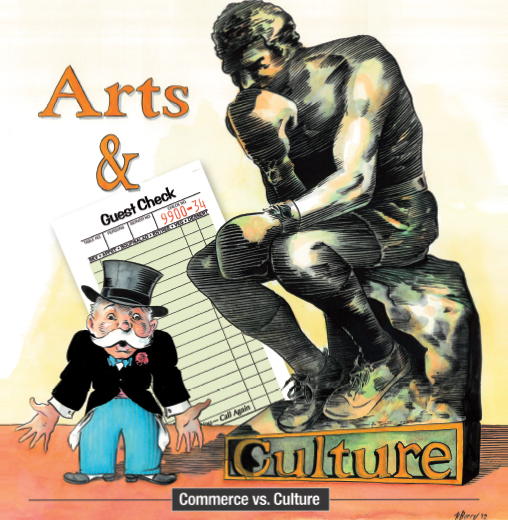
No. 10 (2012)Dear Reader:Happy spring! We are pleased to bring you our spring 2012 edition of the Philadelphia Social Innovations Journal (PSIJ), titled “Innovations in Arts and Culture.”
At the heart of this edition are provocative questions such as: What is the future of arts and culture in Greater Philadelphia? In what ways will the character of audiences and constellation of organizations change in the years ahead? How will arts and culture advance our brand in the international marketplace of cities, enrich our economy, and improve the quality of our lives and those of our children?
Twenty years ago, advocates had to make the case for the significance of arts and culture in the life of a community. No more. Researchers and advocates, including many whose work is featured in this issue, have documented the impact of arts and culture on individuals as well as the cities in which they live. In Greater Philadelphia, there is tangible proof that arts and culture drives revitalization of deteriorating commercial strips; attracts high-end tourists; factor into a company’s decision to locate a headquarter here; spurs recent graduates’ and empty nesters’ decisions to relocate; improves children’s work ethic, attitude, and test scores; and builds bonds of respect and shared experiences among diverse cultures and communities. We have the data that verify these impacts.
But, beyond these metrics lies the most profound benefit of arts and culture. When you watch a performance by the talented musicians of the Philadelphia Youth Orchestra or students of the Curtis Institute of Music, or tour an exhibit of oversized portraits at the Pennsylvania Academy of the Fine Arts, or visit the luscious Bucks County impressionist paintings at the Michener Museum, or encounter the edgy, kinetic world of artist Isaiah Zagar’s Magic Gardens; or attend a performance at Art Sanctuary or Appel Farm; or see yourself reflected in the peculiar bits and pieces of human body parts at the Mütter Museum of the College of Physicians…you get how arts and culture make a difference.
Quite simply, it enlivens the spirit, refreshes the soul.
This Innovations in Arts and Culture edition of the PSIJ had the honor of Nancy Moses serving as Guest Editor. In Nancy’s own words, “The Arts and Culture issue has allowed me to think forward, and to invite an exciting complement of experts to do the same. This issue features a galaxy of leading artists, elected and appointed government officials, scholars, advocates, managers, gallery owners, creative economy employees, board members, funders, and patrons—a 360-degree view of the region's cultural sector. The contributors represent people of diverse perspectives, ages, backgrounds, and at different places in their life journey. The submissions range from well-researched analyses to personal essays to elegantly framed thought pieces to descriptions of disruptive social innovations to photo essays; and we’re pleased to have as ‘cover art’ an editorial cartoon designed just for this edition.
I am proud to present my colleagues in cultural Philadelphia. I hope that their ideas will spark some of your own, and inspire you to share in creating the kind of creative future in Greater Philadelphia we all wish for and deserve.”
PSIJ Upcoming Editions:
In the fall, you can look forward to reading our special edition on innovations in philanthropy, responsible investing and social enterprise. In winter 2013 you can read a special edition on partnerships, mergers and acquisitions.The Arts and Culture edition is sponsored by John S. and James L. Knight Foundation and Bank of America, who are part of the PSIJ Advisory Board. We also want to recognize and thank our other advisory board members, including the Independence Blue Cross Foundation, the Patricia Kind Foundation, Independence Foundation, The Philadelphia Foundation, United Way of Southeastern Pennsylvania, Scattergood Foundation, St. Christopher’s Foundation for Children, Green Tree Community Health Foundation, William Penn Foundation, Wells Fargo, Inglis Foundation, and Barra Foundation, as well as the University of Pennsylvania’s School of Social Policy and Practice, the Wharton School, and Sage Communications.
We hope you will enjoy this edition and think you will find exuberance to the writing, a bit of healthy skepticism, and eager curiosity about what comes next.
Very truly yours,
Nancy Moses
Guest EditorNicholas Torres
PublisherTine Hansen-Turton
Publisher -

Issue 9 | Winter 2012
No. 9 (2012)Dear Reader:Happy winter! We are pleased to bring you our Winter 2012 edition of the Philadelphia Social Innovations Journal (PSIJ), titled “Innovations in Community Impact.”
As you will read about in this edition of the PSIJ, there are many ways that innovation can address needs and positively impact a community. Some of the exciting local endeavors you will read about include:
- Daniel J. Hilferty and Independence Blue Cross's newly created IBC Foundation that serves as a model for Corporate Social Responsibility and Responsible social investing;
- Kenny Gamble, a successful real estate developer in South Philadelphia who took the unusual step of getting into the business of education, seeking to address at a holistic level the social ills that plagued local neighborhoods by focusing on schools as a way to redevelop a sense of pride and ownership within communities;
- Anne Marie Ambrose and the Department of Human Services’ program, Improving Outcomes for Children, which aims to improve service delivery and outcomes for children in care by engaging community partners, streamlining case management and vigilantly tracking outcomes indicators to measure the initiative’s success;
- District Attorney Seth Williams’ commitment to The Choice is Yours (TCY), an alternative-to-incarceration program to increase public safety and reduce recidivism rates by diverting first-time, non-violent felony drug offenders away from prison and into the labor market through positive job training and support;
- Ann Karlen and Fair Food’s strategy to strengthen the Philadelphia regional food system by increasing the demand for a humane, sustainable, local agriculture system; and
- Dr. Lee Nunery and the School District’s efforts to create alternative education settings that ensure all students can succeed in schools and their partnership with colleges to create direct college access and completion pipelines.
You can also read our Nominate an Innovator articles, written by our wonderful volunteer team, about PolicyMap, demonstrating how programs can make “data-driven” decisions using a dynamic web-based tool, Naveguemos con Salud, a program providing breast health education and treatment assistance for Latinas, and Sunday Suppers, a novel intervention focused on educating low-income residents of the Norris Square neighborhood about the importance of taking time for nutritious family meals. Our columnists in this edition will explore: the notion that problem-solving requires a different level of thought than our current thinking, which actually creates programs; the growing relevance of nonprofit collaboration; and the need for nonprofits to think strategically about partnerships as a way to grow revenue.
PSIJ 2012Editions:In the spring you can look forward to reading our special edition on innovations in Arts and Culture, sponsored by the Knight Foundation. In the late summer, you can read a special edition on innovations in philanthropy and responsible investing. Finally, in late fall you can read a special edition on innovations in collaborations, partnerships and mergers.
Increased partnership with foundations and universities:We welcome Independence Blue Cross Foundation and the Patricia Kind Foundation to our advisory board, which is composed of Independence Foundation, The Philadelphia Foundation, United Way of Southeastern Pennsylvania, Scattergood Foundation, St. Christopher’s Foundation for Children, Green Tree Community Health Foundation, William Penn Foundation, Wells Fargo, Inglis Foundation, Barra Foundation, and John S. and James L. Knight Foundation, as well as the University of Pennsylvania’s School of Social Policy and Practice, the Wharton School, and Sage Communications.
PSIJ partners with the University of Pennsylvania’s Fels Institute of Government, the School of Social Policy and Practice, and Wharton. We strongly believe that students are the social innovation heartbeat of our region, and we welcome new and expanded university partnerships. The Fels Institute of Government has created a summer course on innovations that is tied to PSIJ.
We hope you’ll enjoy this edition of the Journal, and wish you all a great end of winter.
Very truly yours,
Nicholas Torres, Co-Founder nick@philasocialinnovations.org
Event Announcement: LEARN Education Conference 2012
Tine Hansen-Turton, Co-Founder tine@philasocialinnovations.orgThe LEARN Education Conference 2012, Bridging Sectors to Rebuild Education, will gather hundreds on March 31 to focus on an action plan to improve public education. The conference attendees and speakers include: politicians, entrepreneurs, innovators, school leaders, teachers, and graduate students in these fields (MBA, law, education, policy).
Through the Conference's panels, working lunch, and keynote speakers, we bring together innovators from key education disciplines to discuss sector-specific barriers to education reform and generate cross-disciplinary solutions. We aim to equip attendees with the background to develop specific tasks they can accomplish to improve public education. The Conference will foster the development of long-term problem-solving for public education.
As Philadelphia's schools recently laid off at least ten teachers in nearly each school, public education's problems become more apparent. This conference tackles those problems by giving attendees exposure to issues of school finance, technology in the classroom, school leadership, entrepreneurial efforts, and policy changes affecting education. Solving education requires joining these efforts and learning where each specialized discipline can assist another. For that reason, attendees with a variety of backgrounds will be interested in attending and learning what they can do to improve public education.
See more and online registration instructions at the Conference webpage: http://www.learn-network.org/2012-conference.html.
Corrections:The PSIJ apologizes for the following errors in the Fall 2011 edition:
In Kaitlyn Woods’ article, A New Access Point for Primary Care, The School-Based Wellness Center at the Pan American Academy Charter School, calculations in Figure 1 were inaccurate.
In Angela Wyan’s and Ralph Scott’s article, Washington, D.C.: A National Model for Lead Poisoning Prevention and Healthy Housing, the final page of the article listed the incorrect regulatory agency. The correct agency is DCRA.
We encourage you to revisit these articles to read the corrected versions.
-

Issue 8 | Fall 2011
No. 8 (2011)Dear Reader:Happy fall!
We are pleased to bring you our fall edition of the Philadelphia Social Innovations Journal, the Philadelphia region’s own social impact journal. This edition is focused on innovations in public health, healthcare and healthy food—some that you may know about and others that may be new to you.
Continuing our new focus on theme-based editions covering pressing social issues, this issue introduces readers to alternative and innovative ideas and strategies for dealing with the persistent problems facing our region’s and nation’s health and healthcare system. You will read about how the placement of a health center in a school in a medically underserved part of Philadelphia is lowering healthcare costs and addressing high rates of asthma among children in that neighborhood. You’ll read about how retail-based convenient care clinics are shaking up the status quo in healthcare delivery by offering services that are high-quality, accessible and low-cost. You’ll learn about innovative approaches to caring for the disabled, tackling both policy and practice. And much more! We welcome your thoughts and comments on the articles.
If you missed it, the PSIJ Special Edition Social Innovations Within Education is now available as a book and can be ordered online at https://www.createspace.com/3659906. We also recently reissued, in early September, the spring/summer edition, including a few new pieces, which, along with all of the archived content the Journal has published, can be found at our website, www.philasocialinnovations.org.
It’s amazing to think that the first-ever edition of the Journal was published almost 2 years ago. With the terrific involvement of our volunteer writers, bloggers, editors and staff, as well as the support of our readers, we’ve come a long way from the little idea we had to start a high-quality, socially-focused journal. If you have any ideas about how we can continue to grow the PSIJ and make it a go-to resource for information about prominent and promising social innovations, we’d love to hear from you.
Very truly yours,
Tine Hansen-Turton, Co-Founder
tine@philasocialinnovations.orgNicholas Torres, Co-Founder
nick@philasocialinnovations.org -

Issue 7 | Spring/Summer 2011
No. 7 (2011)Dear Reader:Happy Spring!
Welcome to the Spring/Summer edition of the Philadelphia Social Innovations Journal (PSIJ), the Philadelphia region’s social impact journal.
Continuing our new focus on theme-based editions regarding pressing social issues, Issue 7 features articles, editorials, columns and interviews on three special topics:
- Partnerships Toward Collective Social Impact,
- Community Impact Strategies, and
- Generational Leadership Targeting Social Entrepreneurs.
As always, we want to thank our more than 80 volunteers who write for the Journal and help plan and coordinate events and seminars. You have an open invitation to join us! PSIJ’s growing readership and value to the region stem from the work of its volunteers, whose collective knowledge keeps our Journal innovative and whose outreach touches all of us.
We hope we’ve supplied you with some stimulating Summer reading. We will be back in the Fall with new editions of PSIJ and events that continue to help advance the region.
Tine Hansen-Turton, Co-Founder
tine@philasocialinnovations.orgNicholas Torres, Co-Founder
nick@philasocialinnovations.org -

Issue 6 | Education Edition
No. 6 (2011)Dear Reader:Happy Spring!
We are pleased to bring you our Winter/Spring edition of the Philadelphia Social Innovations Journal (PSIJ), the Philadelphia region’s own social impact journal. This first in our new theme-based editions focuses on innovations in education—some that you may know about and others that may be new to you—as described by more than 50 local, regional and national authors/experts.
PSIJ shift 2011–2013: As we celebrate the arrival of Spring, we want to share what we have in store for 2011 and beyond. With an ever-growing readership and more than 8,000 subscriptions, 5,000 daily website visits, and feedback from our readers and advisory board, we’ve determined that the time is right to make PSIJ’s main editions more theme-based, addressing some of the most pressing social issues facing our region. Our main editions will still include What Works, Nominated Innovations and Leadership Profile sections, which will feature broader social impact issues in our community and beyond. The Spring/Summer and Summer/Fall theme editions will be focused on community impact, social entrepreneurs, generational leadership and health innovations. Potential future themes include arts and culture, food distribution and consumption, energy, and violence.
Continued focus on our volunteers: If you read PSIJ regularly, you know we are primarily volunteer-based. More than 80 volunteers write for the Journal and help plan and coordinate events and seminars. We are always looking for more volunteers, and you have an open invitation to join us! There is a role for all of you—and the Journal is only as good as it gets with your support.
Increased partnership with universities and foundations: PSIJ partners with the University of Pennsylvania’s School of Social Policy and Practice, Wharton and the Fels Institute of Government. Temple, Drexel and La Salle students also write for the Journal on a regular basis. We strongly believe that students are the social innovation heartbeat of our region, and we welcome new and expanded university partnerships. The Fels Institute of Government has created a summer course on innovations that is tied to PSIJ.
We also welcome Wells Fargo and Inglis Foundation to our advisory board, which is composed of Independence Foundation, The Philadelphia Foundation, United Way of Southeastern Pennsylvania, Scattergood Foundation, St. Christopher’s Foundation for Children, Green Tree Community Health Foundation, William Penn Foundation, the University of Pennsylvania’s School of Social Policy and Practice and the Wharton School, and Sage Communications. We also are in conversations with many other regional foundations.
We hope you’ll enjoy this edition of the Journal—and wish you all a great Spring.
Very truly yours,
Tine Hansen-Turton, Co-Founder
tine@philasocialinnovations.orgNicholas Torres, Co-Founder
nick@philasocialinnovations.org -

Issue 5 | Winter 2011
No. 5 (2011)Dear Reader:Happy New Year!
We are pleased to bring you our Fall/Winter edition of the Philadelphia Social Innovations Journal (PSIJ), the Philadelphia region’s own social impact journal. This edition is packed with local innovations—some that you may know about and others that may be new to you.
As we toast the new year, we want to share what we together accomplished in 2010 and what we have in store for 2011.
Quarterly editions and Journal launch events: In 2010, over 1,500 of you attended our launch events and forums. We especially enjoyed seeing how these gatherings attracted a cross-section of leaders and professionals in all age groups from the nonprofit, foundation, government and private sectors.
Continued focus on our volunteers: If you read PSIJ on a regular basis, you’ll know we are primarily volunteer-based. Over 80 volunteers write for the Journal and help plan and coordinate events and seminars. We are always looking for more volunteers, and you have an open invitation to join us! There is a role for all of you—and the Journal is only as good as it gets with your support.
Increased partnership with universities: PSIJ partners with the University of Pennsylvania’s School of Social Policy and Practice, Wharton and the Fels Institute of Government. Fels has created a summer course on innovations that is tied to PSIJ. Temple, Drexel and La Salle students also write for the Journal. We strongly believe that students are the social innovation heartbeat of our region, and we welcome new and expanded University partnerships.
Special editions devoted to in-depth coverage of regional issues: If you have an interest in generational leadership challenges and opportunities, community and neighborhood development—including innovations in the popular green space—and education and health and human services, we invite you to submit short essays on those topics. Contact us for more information.
We hope you’ll enjoy this edition of the Journal—and wish you all the best in 2011.
Very truly yours,
Tine Hansen-Turton, Co-Founder
tine@philasocialinnovations.orgNicholas Torres, Co-Founder
nick@philasocialinnovations.org -

Issue 4 | Summer 2010
No. 4 (2010)Dear Reader:This Summer the Philadelphia Social Innovations Journal is excited to yet again highlight our region’s remarkable social innovators and innovations.
This fourth edition profiles four innovative organizations and their leaders nominated by you, our readers. Our “Nominate a Social Innovator” writing team, a group of talented young professionals with experience in writing, social enterprise, and nonprofit management, interviewed the leaders of these organizations to present their stories. The team, led by Laura Horwitz, is always happy to receive nominations of people and groups to profile. Laura can be reached directly at laura.horwitz@gmail.com, or you can submit your nomination through the Journal website.
Also read about innovation, leadership, and what works, both locally and nationally, from these experts:
Richard Bendis, founder of Innovation America, whose mission is “to accelerate the growth of the entrepreneurial innovation economy in America.”
David Castro, an Eisenhower and Ashoka Fellow, who writes about what constitutes a social entrepreneur.
Ken Berger and Robert Penna from Charity Navigator, who challenge us to question the validity of the “knowledge” on which both individuals and organizations have traditionally based their giving decisions.
Looking ahead, the Fall edition of the Journal will explore the dynamics of regional and generational leadership with exclusive interviews with some of the region’s long-time and emerging leaders.
We appreciate all of your feedback and encourage you to join the movement by contributing articles, blogging, or simply sharing your ideas. To reach us, please email Tine Hansen-Turton at tine@philasocialinnovations.org or Nick Torres at nick@philasocialinnovations.org.
Thank you for tuning in for the Summer edition of the Philadelphia Social Innovations Journal! We look forward to hearing from you, and we’ll see you again in the Fall.
Yours,
Nick and Tine -

Issue 3 | Spring 2010
No. 3 (2010)Dear Reader:We are excited to bring to you the Spring edition of Philadelphia Social Innovations Journal. The first regional web-based journal of its kind, the Journal brings together Philadelphia’s social innovators and entrepreneurs who are on the front lines solving our most pressing social issues in the region and beyond.
In this third edition of the Journal, we feature articles that examine innovations in special education, mentoring, fresh food and nutrition, and government services access. You’ll meet leaders who have created new education models that target children who have special education needs and are achieving success. You’ll learn how a group of Philadelphia leaders and policy-makers tackled “food deserts,” took their Fresh Food Financing Initiative to the White House and made it a national model for replication. You’ll see how one for-profit company created a public benefit software program and through partnerships with local nonprofits is now connecting thousands of people to government benefits they qualify for here in the region and beyond. And you’ll gain insight into new models of providing mobile dental services to inner-city children and youth, along with new ways of connecting with vulnerable youth that will change the future of how we provide mentoring services.
We have also invited contributions from local and national experts in organizational leadership, in management, in performance-based and high-impact nonprofits, and in leadership development. As always, some of these articles are provocative by design, and we look forward to getting your reactions and feedback. What excites us is that regionally and nationally known and up-and-coming authors are contributing thought pieces on disruptive innovations and lessons about what works and does not work in the social sector.
We have many people and organizations to thank, including our local funders and investors: United Way of Southeastern Pennsylvania, The Philadelphia Foundation, Green Tree Community Health Foundation, Independence Foundation, The Thomas Scattergood Foundation and St. Christopher’s Foundation for Children, William Penn Foundation and Wachovia Foundation. We also want to thank our partners from University of Pennsylvania’s Wharton School, Fels Institute of Government, and School of Social Policy and Practice, along with La Salle University and Drexel University.
Finally, we appreciate all your feedback and welcome your input and ideas. We encourage you to get involved, whether by contributing articles, blogging or sharing ideas about social innovators and innovations that we might highlight in future issues. This Summer we’ll feature several innovators who were nominated through “Nominate an Innovator.” To reach us, please email Tine Hansen-Turton at tine@philasocialinnovations.org or Nicholas Torres at nick@philasocialinnovations.org.
Thank you for tuning in! We look forward to hearing from you.
Yours,
Nick and Tine -

Issue 2 | Winter 2010
No. 2 (2009)Dear Reader:We are excited to bring to you the Winter edition of Philadelphia Social Innovations Journal. The first regional web-based journal of its kind, the Journal brings together Philadelphia’s top social innovators and entrepreneurs who are on the front lines solving our most pressing social issues.
In this second edition of the Journal, you’ll meet leaders who have created new models of behavioral health care that makes mental health services accessible within primary care settings and in the community. You’ll learn how local young people can effectively gain life-changing intern opportunities in the local business community. You’ll reap insights from a social innovator and former felon who has been instrumental in preventing youth crime by having ex-felons serve as mentors. And you’ll gain knowledge of innovations leading to incentivizing people to go back to college to finish their degrees. Finally, you’ll have a better idea of the cost of partnering and how to ensure you get a return on investment for your efforts.
We have also invited contributions from local and national experts in organizational leadership, in management, in performance-based and high-impact nonprofits, and in leadership development. Some of these articles are provocative by design. As in the fall, when one of our articles by David Hunter went viral, we hope they will spur passionate discussions among our readers — and with this in mind visit us on Facebook and follow us on Twitter.
We’ve had an exciting journey since our October kick-off — and best of all we’ve met so many amazing regional innovators across all sectors. A growing group of over 60 volunteers, of all ages and professions, edit, blog and write op-eds, and help manage the Journal. Regionally and nationally known and up-and-coming authors are contributing thought pieces on disruptive innovations and lessons about what works and does not work in the social sector. And our wonderful students from University of Pennsylvania’s Wharton School, Fels Institute of Government, and School of Social Policy and Practice, and from Drexel University’s School of Public Health, are producing feature articles on regional innovators and innovations in the healthcare, violence prevention and human capital (education and employment) sectors and on partnerships.
We appreciate all your feedback and encourage you to participate, whether through blogging or writing articles. When we hear comments from colleagues like “it’s been a difficult year for our country — but the Journal is like fresh air, it is positive energy, and it gives me and others hope that we are still a country and people who can innovate,” we know that together with you we are on to something that we need to continue to foster and grow in this region.
We have many people and organizations to thank, including our local funders and investors: United Way of Southeastern Pennsylvania, The Philadelphia Foundation, Green Tree Community Health Foundation, Independence Foundation, The Thomas Scattergood Foundation and St. Christopher’s Foundation for Children. We also want thank our partners from University of Pennsylvania’s Wharton School, Fels Institute of Government, and School of Social Policy and Practice, along with La Salle University and Drexel University.
We welcome your input and ideas to help us mature and grow, and we encourage you to get involved whether by contributing articles or sharing ideas about social innovators and innovations that we might highlight in future issues. Please email Tine Hansen-Turton at tine@philasocialinnovations.org or Nicholas Torres at nick@philasocialinnovations.org.
Thank you for tuning in! We look forward to hearing from you.
Yours,
Nick and Tine
Why an Old-fashioned Light Bulb?
A funder recently told us, “I love the Journal and its articles, but why did you use an old-fashioned light bulb for a logo?”
The truth is that we debated using a modern light bulb, and you will see one on our website pages. But we went with the traditional one for our logo, because social innovation at its core is about creating a simple solution to an old problem. Our old-fashioned light bulb changed human existence and thus itself symbolizes change.
-

Issue 1 | Fall 2009
No. 1 (2009)Dear Reader:We are excited to bring to you the quarterly Philadelphia Social Innovations Journal. The first regional web-based journal of its kind, it brings together Philadelphia’s top social innovators and entrepreneurs who are at the front lines solving our most prominent social issues. We hope the Journal will stimulate our private citizens to engage with the Greater Philadelphia region’s social innovation minds and increase the area’s already exceptional capacity to recognize social problems and apply entrepreneurial principles to organize, create and manage high-impact social change.
The idea for this publication began on a journey to the Eisenhower Fellowships international 2008 conference in Brazil, at which we joined a network of 1600 social change agents from around the world. Participating in conversations on global change with other Eisenhower Fellows, in combination with discussions on the innovations represented by our partner in the Stanford Social Innovation Review, led us quickly to conclude that it would be great to have a regional vehicle to highlight social innovators and innovations.
Here we are, 15 months later, presenting you with our first edition of Philadelphia Social Innovations Journal. Our motivation for starting an on-line social innovation community is somewhat self-serving as we maintain that, despite popular beliefs, the Philadelphia region is leading and creating cutting-edge social innovations. Leaders of these social innovations, typically heads or emerging leaders of the most effective nonprofit organizations, spend most of their time “doing” and less time publishing. Also, many of us spend most of our time within our own silos, making cross pollination difficult. Few of us get the opportunity to learn from each other and develop ideas for how we might partner. But Philadelphia Social Innovations Journal, we hope, will change that paradigm.
In this first edition, we’ll introduce you to several inspirational social innovators and their organizations working in the health, violence prevention and human capital (education and employment) sectors. You’ll meet leaders who have created a new model of primary healthcare that will revolutionize the way we gain access to care in the future. You will learn from two social innovators who have successfully created models to assure low income children and adults benefit from excellent quality education backed by high school diplomas and associates degrees, setting them on a path out of poverty. You’ll read insights from a social innovator who has been instrumental in changing the local and national approach to preventing elderly abuse … and much, much more.
We have also invited contributions from local and national leaders who are known for their expertise in organizational leadership, in management, in performance-based and high-impact nonprofits, and in leadership development. Some of these articles are provocative by design. We hope they will spur passionate discussions among our readers, and with this in mind we have established and online discussion network to facilitate dialogue.
We have many people and organizations to thank, including our local funders and investors: United Way of Southeastern Pennsylvania, The Philadelphia Foundation, Greentree Community Health Foundation, Independence Foundation, The Thomas Scattergood Foundation and St. Christopher’s Foundation for Children. We also want thank our partners from University of Pennsylvania’s Wharton School, Fels Institute of Government and School of Social Policy and Practice, along with La Salle University, Drexel University and Jefferson University, all of which have teamed up with the Journal. These academic partners have committed to providing master-level students to serve as writers. Last, but hardly least, we want to thank our staff at Congreso, National Nursing Centers Consortium and Public Health Management Corporation, who put up with us this summer as we were planning the Journal and who contributed immensely to our ability to introduce the publication this fall by authoring articles and helping us construct the framework.
As with all new ventures, Philadelphia Social Innovations Journal is in the start-up phase. We welcome your input and ideas to help us mature and grow, and we encourage you to get involved whether by contributing articles or sharing ideas about social innovators and innovations that we might highlight in future issues. Please email Tine Hansen-Turton at tine@philasocialinnovations.org or Nicholas Torres at nick@philasocialinnovations.org.
Thank you for tuning in! We look forward to hearing from you.
Yours,
Nick and Tine
Previous
76-98 of 98