Archives - Page 2
-

Transformative Social Innovations: Cross Sector Collaborations and Partnerships
Vol. 10 (2021)Dear Reader,
The pandemic has made it clear that the world is facing increasingly complex challenges. These have manifested in deep social inequalities, high economic instability, and increased fragility of our governance systems across the globe. Additionally, COVID-19 has made more prominent the increasing interdependence of our societies. Thanks to globalization and technological advances, our individual actions can have immediate and wide-reaching effects.
Our current context calls for a new approach to understanding problems and new ways of organizing for transformational change. We tend to think about this from a fragmented perspective. For example, social, environmental, and economic challenges are often seen as separate from one another. This narrow view is reflected in how we address problems—focusing on one issue at a time and through siloed efforts. Yet the complexity of global dynamics means that, to achieve lasting change, we need to engage diverse voices and collectively find solutions for the good of all. Bringing together different perspectives can help to make sense of the full picture, balance potential competing goals or values, and pool knowledge and resources to envision new pathways for creating change.
In recent years we have witnessed the emergence of unique partnerships and cross-sector collaborations that give us insights into the way forward. Social innovators everywhere are providing systemic and effective solutions that challenge current economic and political models. Although these innovations arise from different concerns and perspectives, they share a focus on co-creation across sectors, more systemic approaches that embrace complexity, and deeper and more diverse citizen participation. Moreover, the conceptual cornerstones that unified the United Nations Sustainable Development Goals (SDG) set a precedent that characterizes and connects cross-sector initiatives. Looking ahead, it will be crucial to accelerate this transition towards a new paradigm that can rise to the challenge of building a more sustainable future.
This edition of the Social Innovations Journal titled Transformative Social Innovations: Cross Sector Collaborations and Partnerships outlines the architecture of transformative social innovations, with a focus on Latin America. The edition makes an in-depth examination of outstanding social innovations that have emerged in response to the exacerbation of socio-environmental challenges. These examples illustrate the key elements that contribute to creating positive social transformation and resilient societies. The analysis also reviews the history of social innovation in the region, facilitating an understanding of the emerging principles that the case studies demonstrate.
We hope this edition will provide inspiration and useful lessons that social innovation leaders can apply to drive transformative solutions within their own ecosystems; create space for reflection on how to engage diverse voices to innovate; and challenge leaders across sectors to break down barriers to foster co-creation.
Yours in Social Innovation
Nicholas Torres, Co-Founder, Social Innovations Journal
Linda Peia, Ashoka
Vanessa Vargas, Ashoka
Sebastian Gatica, CoLab Innovación Social UC
Special Acknowledgements
Edition Co-editors: Linda Peia, Maria Cerdio
Content Curators: Sebastian Gatica, Linda Peia, Vanessa Vargas
Peer Reviewers: Tasso Azevedo, Hanae Baruchel, Florencia Gay, Alexandra Ioan, Delfina Irazusta, Hector Jorquera, Vincent Lagace, Joaquin Leguia, Maria Luisa Luque, Cristina Monje, Oscar Romo, Luis Antonio Villanueva, Candelaria Yanzi
The Latin America compilation is the result of a joint collaboration between Ashoka and the CoLab of Social Innovation - UC thanks to the support of the PES Latam alliance.
-

Health Equity to improve Impact on People’s Health
Vol. 9 (2021)Dear Reader,
Health Equity requires that “everyone has a fair and just opportunity to be healthier” by “removing obstacles to health such as poverty….. lack of access to good jobs with fair pay, quality of education and housing, safe environments, and health care.”[1] Achieving health equity requires effective solutions by both investing in systems that are designed to improve social and economic conditions including housing, transportation, education, income and employment assistance, child and family supports, and legal and criminal justice services and integrating these investments into often disconnected medical and public health programs tasked with improving health.
Applying Social Accountability/Responsibility Standards (Student Recruitment, Selection and Support; Faculty Recruitment and Development, Educational Program, Research, and Governance, School Outcomes and Societal Impact) to academic institutions provides a mechanism to connect, collaborate, and integrate services to increase health equity with the ultimate goal of improving the quality of health service delivery for all.
One important Social Accountability Standard is Societal Impact. Societal Impact ensures that programs and schools are addressing evolving needs in the society, regions and communities they serve. Academic institutions need to regularly seek to evaluate the outcome of their efforts as well as the impact they are having on graduates and their practice. Ultimately, they should measure their impact on policies, practice and performance of the health system and health in the communities they serve. Assessing the effect of education strategies on health systems and population health is clearly challenging as it is influenced by a multitude of complex, interlinked, dynamic factors and conditions many of which are not within the control of the education institution. Consequently, researchers need to apply multiple methodologies to build evidence for attribution, contribution, and accountability. Schools striving towards greater accountability and impact are beginning to assess impact.
This edition, written by “pracademics”, focuses on articles in case study and story format that have reduced healthcare inequities and improved the impact on people’s health. Articles in this edition focus on productive partnerships with health actors including policy makers, health professionals, academic institutions, communities and health administrators.
The articles featured in this edition provide a framework that academic institutions and health systems to consider when measuring their societal impact.
[1] Robert Wood Johnson Foundation. From Vision to Action: measures to Mobility a Culture of Health. Princeton: RWJF; 2015.
Nicholas Torres
Co-Founder, Social Innovations Journal
-

A Healthcare Workforce Cadre That Meets A Country’s Needs
Vol. 8 (2021)We live in a global healthcare workforce crisis. The World Health Organization’s Global Strategy on Human Resources for Health: Workforce 2030 (”GSHRH”) emphasizes the importance of dynamic and effective health practitioner regulation to the achievement of SDG3: Good Health and Wellbeing. In recent years, regulatory mechanisms and resources across WHO Member States have experienced substantial stress due to the increasing volume and privatization of health professional education, rising importance of previously unregulated occupations; emergence of new occupations; emergencies and humanitarian crisis; accelerating international mobility; new modes and cross border service delivery (e.g. use of digital technology); increasing focus on team-based and integrated networks for service delivery; as well as increasing consumer demand, expectation and knowledge. A synthesis paper was published in February 2015 to inform the beginning of a Global Strategy which is of tremendous value to all relevant stakeholders in the health workforce area, including public and private sector employers, professional associations, education and training institutions, labour unions, bilateral and multilateral development partners, international organizations, and civil society.
Driven by a moral compact to mend the fabric of our communities upon which health depends, The Social Innovations Journal has partnered with The Network: Toward Unity For Health (TUFH), Physician Assistants for Global Health (PAGH), International Academy of PA Educators (IAPAE), International PA Organization (IPAO), Global Association for Clinical Officers (GACOPA), and the International Federation of Physician Assistants/Physician Associates and Clinical Officer/Clinical Associate/Comparable Student Federation (IFPACS), the Beyond Flexner Alliance, and AFREHealth to strengthen knowledge networks in order to share experience and best practices in health practitioner frameworks and their evolution across countries. We believe that strengthening knowledge networks will lead toward the adoption and implementation of global policy recommendations locally.
The World Health Organization (WHO) in 2008 advocated for “Treat, Train, Retain” which refers to the implementation of task-shifting in attempt to meet the unmet burden of disease. Task shifting/sharing refers to healthcare workers with less training and qualifications performing tasks and activities that meet the country’s needs. There isn’t any set structure on how to implement task shifting; however, there is an abundance of literature describing the need for task-shifting and task sharing. The Beyond Flexner Alliance launched The Health Workforce Diversity Tracker to promote greater racial and ethnic parity in the health workforce through measurement and accountability. The issue of highest concern, in terms of inequalities in healthcare is deepening the diversity of the workforce as an optimal strategy to address racial disparities. But this goal remains elusive without accurate data on the composition of the workforce, the pipeline, and clear benchmarks for organizations to strive toward. The Health Workforce Diversity Tracker is dedicated to addressing under-representation among healthcare workers by analyzing data on the diversity of the health workforce and the educational pipeline across thirty health occupations, from front-line workers to physicians.
Combining the reality of task-shifting within the promotion of racial and ethnic parity in the health workforce, this edition of the Social Innovations Journal titled: A Healthcare Cadre That Meets A Country’s Needs provides practical tools and solutions to support local change networks to address the global health workforce crisis. Included in this edition, to serve as a guide for other healthcare workforce cadres, is a database of articles as a medical anthropological approach by a non-physician clinician for 31 countries for non-physician clinicians. This data has not been previously described in the literature by NPCs themselves and we hope this concentration of country-by-country case studies serves as a window of one workforce cadre to fulfill the healthcare workforce gap.
Mary Showstark, Guest Edition Curator and Editor
Nicholas Torres, Co-Founder, Social Innovations Journal
-

Economic Inequality, Social Mobility, and Institutionalized Racism
Vol. 7 (2021)Dear Reader,
Income inequality in the United States has steadily worsened since the 1970s.[1] We have experienced a 39% increase in income inequality in under four decades—and it comes as a result of an increase in inequality each decade.[2] Furthermore, with the growth in income inequality in the United States, it is decreasingly plausible that someone born into a lower-income household will achieve a higher income as an adult. A 2012 study by The Pew Charitable Trusts showed that 43% of those born into the bottom fifth of households are stuck there, and with social mobility declining since the 1970s, matters are only worsening.[3]
People from around the world come to the United States for the promise of the “American Dream,” the notion that a person born into the bottom economic rung can rise to the top. The same Pew study showed that just 4% born into the lowest-earning 20% of United States families rise to the top 20%.[4] We need to face the reality that the American Dream is more suitably titled the “American Myth.” Or, in the words of Ta-Nehisi Coates, “The American Dream is a lie.”[5]
The situation only becomes more pressing when we consider how income inequality affects Black, Indigenous, and Hispanic and Latino Americans. While the United States has seen massive strides in civil rights, education, and history-making achievement for Black Americans since 1970, median Black household income as a percentage of white household income has only increased 5%—from 56% to 61%—with Latinx Americans earning only slightly more.[6] In terms of social mobility, things are more challenging for people of color, too. Over half of Black Americans born into the bottom fifth of households remain there as adults, while this number drops to 33% for white Americans.[7] It is also more likely that Black Americans will experience downward mobility than white Americans.[8]
Given the magnitude and enduring nature of these issues, we need more than just solutions. We need innovative solutions that address the underlying institutional, systematic, and societal barriers that collectively—both intentionally and unintentionally—reinforce economic disparities. Articulating these solutions will push us all to think more creatively and act more decisively.
This edition of The Social Innovations Journal will do just that. We aim to provide insight into the problems of income inequality, social mobility, and the role of institutional and social racism. Moreover, we hope to share solutions and shed light on bright spots where organizations and individuals are overcoming society’s limitations. We also will share policy suggestions and case studies, to encourage lobbyists and policymakers to enact broad changes to make it easier for all people in the United States to achieve the dream we have been promised.
April Kaplowitz, Guest Edition Curator and Editor
Nicholas Torres, Co-Founder, Social Innovations Journal
[1] U.S. Census Bureau, “Income and Poverty in the United States,” U.S. Census Bureau, 2018, Table A-4.
[2] Juliana Horowitz, Ruth Igielnik, and Rakesh Kochhar, “Most Americans Say There Is Too Much Economic Inequality in the U.S., but Fewer Than Half Call It a Top Priority,” Pew Research Center, 2020, https://www.pewresearch.org/social-trends/2020/01/09/trends-in-income-and-wealth-inequality.
[3] The Pew Charitable Trusts, “Pursuing the American Dream: Economic Mobility across Generations,” The Pew Charitable Trusts, 2012, https://www.pewtrusts.org/~/media/legacy/uploadedfiles/wwwpewtrustsorg/reports/economic_mobility/pursuingamericandreampdf.pdf; Kathrine Bradbury, “Trends in U.S. Family Income Mobility, 1969 – 2006,” Federal Reserve Bank of Boston, 2011, https://www.bostonfed.org/publications/research-department-working-paper/2011/trends-in-us-family-income-mobility-1969-2006.aspx.
[4] The Pew Charitable Trusts, “Pursuing the American Dream.”
[5] Ta-Nehisi Coates, Between the World and Me. (New York City: Spiegel & Grau, 2015), 52.
[6] Kathrine Schaeffer, “6 Facts about Economic Inequality in the U.S.,” Pew Research Center, February 7, 2020, https://www.pewresearch.org/fact-tank/2020/02/07/6-facts-about-economic-inequality-in-the-u-s.
[7] The Pew Charitable Trusts, “Pursuing the American Dream.”
[8] The Pew Charitable Trusts, “Pursuing the American Dream.”
-

Innovations in Community-Based and Center Based Services
Vol. 6 (2021)Dear Reader,
Since the advent of key pieces of federal legislation, including the Community Mental Health Act of 1963, the Americans with Disabilities Act in 1990, and the Olmstead Decision of 1999, the trend has remained consistent towards locating services in the community and in the home for children and adults with all kinds of disabilities, including mental health challenges, intellectual disabilities, autism, physical disabilities, and others. In the Olmstead Decision, the Supreme Court held that community-based services should be provided to persons with disabilities when (1) such services are appropriate; (2) the affected persons do not oppose community-based treatment; and (3) community-based services can be reasonably accommodated, taking into account the resources available to the public entity and the needs of others who are receiving disability services from the entity.
When state psychiatric institutions were closed rapidly in the 1950s and subsequent decades when community-based services were not yet widely available, followed by legislation in the 1980s that drastically reduced spending on mental health services, there was a dramatic increase in homelessness of persons with mental health conditions that persists to the present day. Recent events in which people with mental health issues have had disastrous encounters with law enforcement have further illustrated the scope of unmet needs of individuals with mental health conditions.
Clearly the majority of people can be successful receiving services in the home or community, while a small number require a higher level of care and more intensive services. But thoughtful consideration must be given to creative and innovative ways to ensure that programs and services are actually available for people who require them, allowing for maximum choice on their part – especially those with complex needs. And these services should offer the greatest level of independence and safety for all community members.
This edition of the Social Innovations Journal focuses on the progress made in developing community-based services where once there were few or none, as well as policy implications surrounding services and systems which remain fragmented, and best practices and models. This edition explores a broad range of themes which address far-reaching topics relating to innovations in policy on how we will address the dire workforce crisis that touches nearly every corner of the human services sector, innovations in the use of data, and systems integration and models that exemplify innovative solutions to providing services in community-based settings.
Tine Hansen-Turton, Woods Services, Guest Edition Curator and Editor
Nicholas Torres, Co-Founder, Social Innovations Journal
-
Innovative Practices for Systems Transformations
Vol. 5 (2021)Dear Reader,
This edition titled, Innovative Practices for Systems Transformations, of the Social Innovations Journal is sponsored by the Transformations Community, a generative space and catalyzing force for sustainability research and practice. This global community of transformation “pracademics” (both practitioner and researcher) is responding to a growing recognition that we need new approaches to address climate change and other existential threats to social-ecological systems.
In the spirit of the community’s pracademic identity, this edition lies between the formalistic rigor of scholarly peer-reviewed scientific articles and the advice and case histories and practical wisdom that are the lifeblood of communities of practice. This edition captures and shares what Aristotle called “phronesis”, or the practical wisdom of our members that is situated in specific time and place and requires deliberation, judgment, and choice, and above all, experience. This edition is divided into four sections, each with its own style, perspective on practice, and relationship between the authors and practitioner communities.
The first section, Social Innovation In a Time of Disruption, contains five articles that Guest Editor Bruce Goldstein wrote that consider how social innovation organizations can maintain the enabling conditions for productivity, commitment, creativity, and purpose in a time of disruption. These papers emerged from his three-year partnership with a group of highly experienced and effective “netweavers” who shared what they had learned about how to pursue social justice and ecological and economic well-being while working remotely within collaborative learning networks. The core of these articles are the verbatim words of the netweavers themselves, which he organized and accompanied with enough commentary to make them coherent and cohesive. These articles are very timely as we emerge into a world transformed by the Covid-19 pandemic and poised to move beyond the reactionary Trump years. They get to the heart of how to lead our organizations to address seemingly intractable problems (such as systemic racism and climate change), adapt to changing conditions and new contexts, scale innovation, and respond rapidly to crisis.
The second section, Transformation Workshop Papers, contains three articles written by Transformations Community members who facilitated interactive community online workshops. These papers provide guidance on how to organize and facilitate participatory visioning exercises to help diverse communities identify desirable social-ecological transformation pathways. They include a participatory food systems sustainability assessment framework from Europe, a method for people to reflect on their own social-ecological agency developed in a transformation laboratory in Mexico, and a scenario-building process that was developed in southern Africa for grappling with complex social-ecological issues and envisioning desirable futures. These approaches exemplify the focus of the transformative community on empowering diverse people to engage in knowledge co-production to enhance their ability to foster systems change.
The third section contains four articles that capture the diversity and richness of the work undertaken by members of the Transformations Community. The first considers how visioning and project evaluation imported from the developed north to the global south are an expression of colonization, and can be improved by taking a more systemic perspective grounded in local culture and context. The second considers how a systems approach to evaluation can address the field’s fixation on projects, short timeframes, quantitative solutions, and accountability. The third article describes a way to visualize governance transformations across a regional transect, in order to understand how government, civil society and market forces can create positive momentum to respond to ecosystem change. The final article considers how a whole person learning approach can enhance individual capacities for social innovation, and describes how the Wolf Willow Institute for Systems Learning is teaching social innovators about systems change
The final section, includes four contributions that complement the perspectives of the Transformations Community of Practice and suggest possibilities for collaboration and mutual learning. These four articles address the self-advocacy skills required of legal services clients in low-income communities, examine the work of the Philadelphia Higher Education Network for Neighborhood Development (PHENND), propose how social innovation networks can advance the practice of social innovation diplomacy, and consider how online social enterprise directories can address diverse stakeholder needs by overcoming common challenges in the social enterprise sector.
Considered as a whole, the articles in this special issue provide a fascinating cross-section of the highly participatory and action-oriented work of the Transformations Community of Practice.
We conclude by offering special thanks to Lisa Smith, the production editor of this special issue and Tica Lubin, who created the Transformations Community website and Netweaver Network website that hosts the workshops and netweaver dialogue series.
Bruce Goldstein, University of Colorado Boulder, Guest Edition Curator and Editor
Nicholas Torres, Co-Founder, Social Innovations Journal
-
Women, Migrant and Refugee, and Remote and Rural Health Care Best Practices
Vol. 4 (2020)Dear Reader,
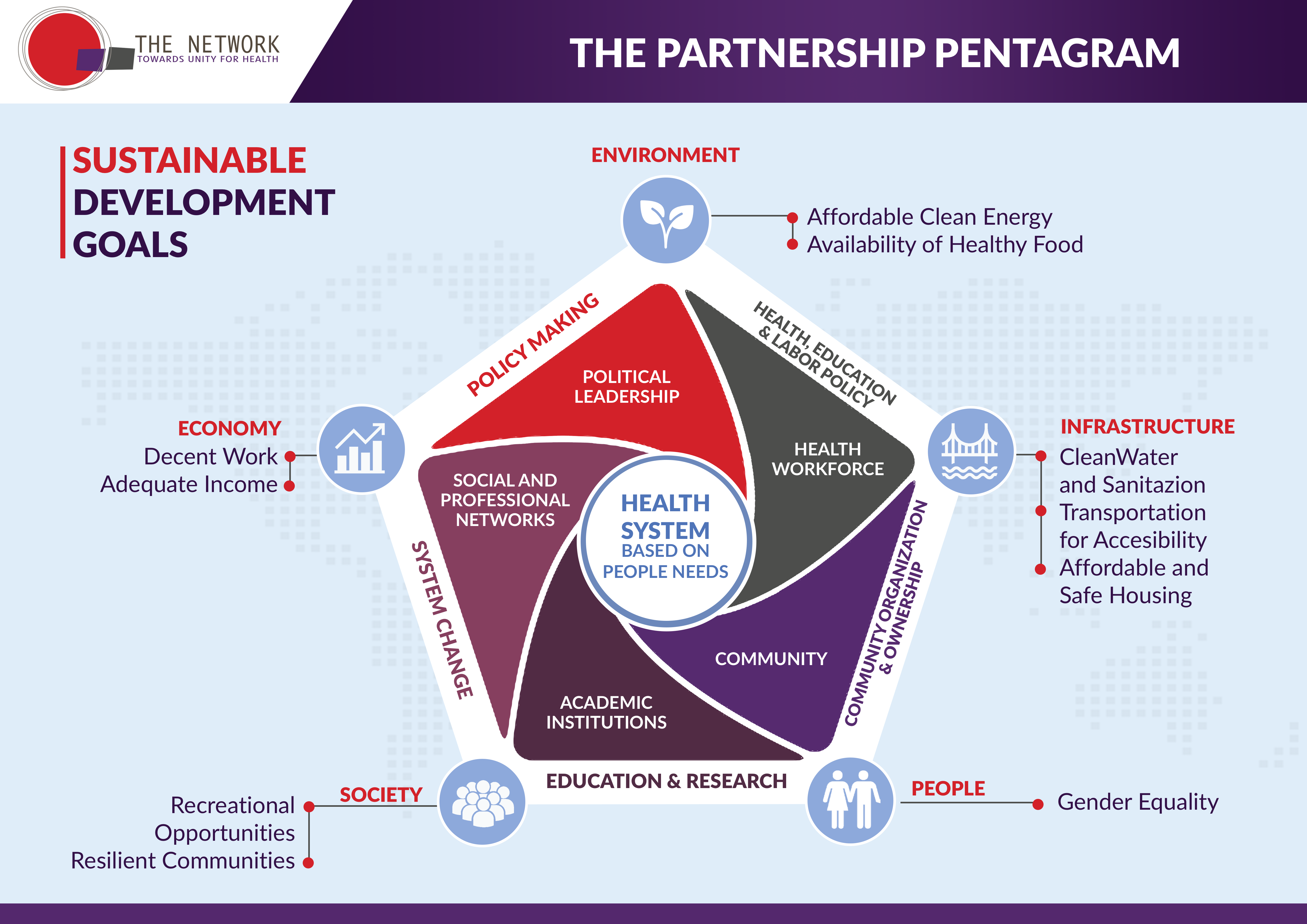
This edition of the Social Innovations Journal is curated by The Network: Toward Unity for Health (TUFH), an official non-state actor of the World Health Organization. TUFH is driven by a moral compact to mend the fabric of our communities upon which health depends. The Network: Toward Unity For Health is committed to driving communal interests by supporting local change agents toward the adoption and implementation of global policy recommendations. TUFH concentrates its efforts on practical tools and solutions that achieve action by local change networks.
TUFH does its work by bringing the “Partnership Pentagram” to life by supporting local change agents and networks. TUFH’s “Partnership Pentagram” is framed within the sustainable development goals and social determinants of health, emphasizing that creating a health system based upon people’s needs must not only involve the five key players in the change process, but must do so within the context of where people live and work. TUFH engages policymakers, academic institutions, health professionals, and communities to collectively address the underlying barriers to healthy individuals and communities.
This edition highlights three policy action papers on women, migrant and refugee populations, and aging society health which were driven by TUFH’s policy fellows and guided by global thought leaders through TUFH’s taskforces. Each policy action paper provides concrete policy recommendations and actions steps for ministries of health, academic institutions, and health systems to adopt and implement. This edition also highlights best practices around the globe on the adoption and implementation of best practices in women, migrant and refugee, remote and rural, and aging society health.
Around the world, global health policy leaders and associations are convening global leaders, publishing research and policy articles, and releasing “call to action” initiatives for political leaders and health system institutions to adopt and implement. Many of these recommendations are framed within the United Nations Sustainable Development Goals, indirectly correlated with the social determinants of health, indicating that health is much broader than clinical interventions. Today, we witness hospitals and health systems being more like “repair shops,” trying to correct the damage of causes collectively denoted “social determinants of health.” The global fabric of our communities upon which health depends is torn and we must heal this fabric through communal interests.
We hope this edition is a first step toward healing this fabric.
Sincerely,
Nicholas Torres
Co-Founder
-
Social Accountability and Accreditation; Interprofessional Education and Team Based Care; and Population Health Approaches to Global Health Access and Equitable Health
Vol. 3 (2020)Dear Reader,
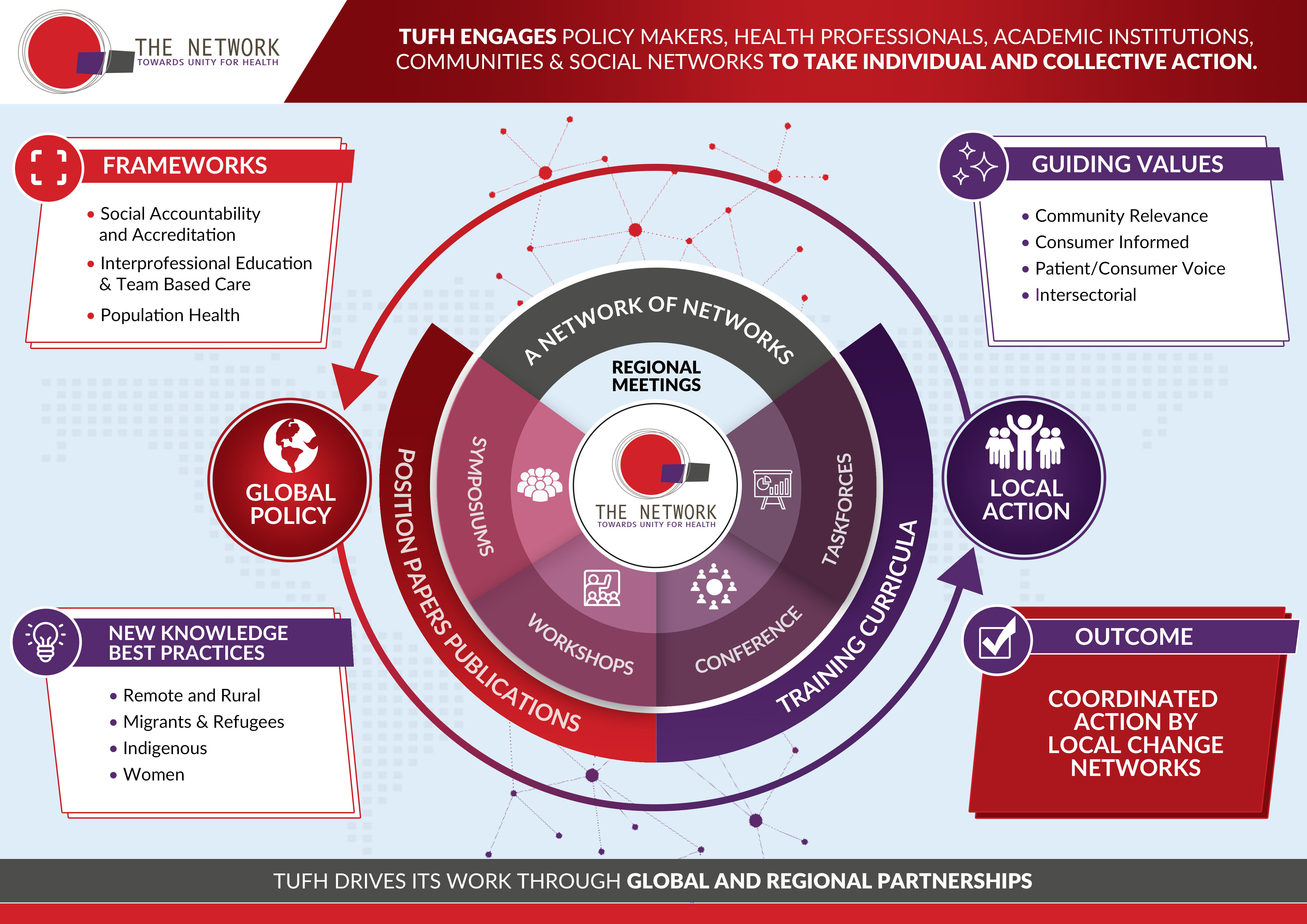
This edition of the Social Innovations Journal was curated by The Network: Toward Unity for Health (TUFH), an official non state actor of the World Health Organization (WHO). TUFH is driven by a moral compact to mend the fabric of our communities upon which health depends. The Network: Toward Unity For Health is committed to drive communal interests by supporting local change agents work toward the adoption and implementation of global policy recommendations. TUFH concentrates its efforts on practical tools and solutions that can achieve action by local change networks.
TUFH does its work by bringing the "Partnership Pentagram" to life by supporting local change agents and Networks. TUFH’s "Partnership Pentagram" is framed within the sustainable development goals and social determinants of health emphasizing that creating a health system based upon people’s needs must not only involve the five key players in the change process, but must also do so within the context of where people live and work. TUFH engages policymakers, academic institutions, health professionals, and communities to collectively address the underlying barriers to healthy individuals and communities.
This edition highlights three policy action papers on social accountability and accreditation, interprofessional education and team-based care, and population health which were driven by TUFH’s policy fellows and guided by global thought leaders through TUFH’s Taskforces. Each policy action paper provides concrete policy recommendations and action steps for ministries of health, academic institutions, and health systems to adopt and implement. This edition also highlights best practices around the globe on the adoption and implementation of social accountability and accreditation, interprofessional education and team-based care, and population health.
Around the world, global health policy leaders and associations are convening global leaders, publishing research and policy articles, and releasing “call to action” initiatives for political leaders and health system institutions to adopt and implement. Many of these recommendations are framed within the United Nations Sustainable Development Goals, indirectly correlated with the social determinants of health, indicating that health is much broader than clinical interventions. Today, we witness hospitals and health systems being more like “repair shops,” trying to correct the damage of causes collectively denoted “social determinants of health.” The global fabric of our communities upon which health depends is torn and we must heal this fabric through communal interests.
We hope this edition is a first step toward healing the fabric of our communities.
Sincerely,
Nicholas Torres
Co-Founder
-

Social Mobility: Inspiring and Building the Capacity of Local Change Agents to Impact Poverty
Vol. 2 (2020)Dear Reader,
For more than 10 years; The Social Innovations Journal has connected and inspired local change agents through the sharing of knowledge, best practices, and research to reduce poverty. Concrete impact and change require more than education and engagement -- it requires strategic action. This edition of the Social Innovations Journal highlights the strategies of key actors within the Philadelphia ecosystem who are collectively moving the needle on poverty. To ensure we always have an international flavor, we have also included three articles related to initiatives in Venezuela as related to Social Mobility.
To provide context, nearly one in four Philadelphians is living at or below the federal poverty line. Philadelphia's poverty rate is the highest among the 10 largest cities in the United States; and is more than double the national average. There are numerous city-run programs as well as 384 nonprofit organizations with the word "poverty" included in their missions that provide assistance to the residents of Philadelphia. Philadelphia City Council released its Poverty Action Plan focused on three strategies: Social Safety Net, Housing, and Jobs and Education.
Legislators, government, not-for-profits, academic institutions, and to some extent private companies are all tackling poverty. Despite these efforts, agreed upon strategies, and an ongoing call to action, limited change has occurred for the simple reason that poverty is complex. What is needed is an agreed upon shared measurements and evaluation system that can assess the collective efforts and impact for all organizations. A shared measurement and a system-wide evaluation system would accomplish three things:
- Measure the collective impact of all organizations working on poverty in the region, with the understanding that poverty can be reduced if the collective is aligned on what is important to assess.
- Transparency in reporting that will provide organizations, and the collective, the opportunity to adjust their strategies/initiatives if the agreed upon measurements are not being achieved.
- Data gathering from the collective that can be used to influence local, state, and national anti-poverty policies.
Generally, local change is either driven by local change agents defined as individuals or institutions that are in a position to influence system behavior at their level OR policy change agents defined as governmental policymakers, regulators, or legislators who are advocating, organizing, and supporting change in a sustainable manner. Rather than local change agents working independently and often in isolation of each other, sustainable change will occur when change agents align their efforts towards collective impact through shared measurement goals.
At the Social Innovations Journal, we believe that if we create platforms for the fostering of dialogue, learning, new knowledge, and the creation of communities of practice then we will inspire local change and policy agents to take action locally through adopting and implementing policy and strategy recommendations.
We hope this edition inspires greater collaboration that results in collective action and impact to holistically address poverty in Greater Philadelphia as well as other ecosystems to ultimately help move individuals up the social mobility ladder to a living wage to reduce economic disparities.
Sincerely,

Nicholas Torres, Edition Curator
-

An Insight Into Social Innovations Within the Human Services System and Population Health
Vol. 1 (2020)An Insight into Social Innovations Within the Human Services System and Population Health highlights the beginning of a shift of human service organizations to a population health strategy. The relevance and applicability of population health to the human services is often overlooked as it is predominantly associated with the health care industry. However, health and human service leaders are shedding the old ways of doing business in favor of new approaches that are innovative, efficient, effective, and responsive to the needs and demands of focus populations.
In this issue, health and human services leaders, innovators, and entrepreneurs share ideas on meaningful and inclusive strategic planning practices that disrupt the status quo; effective change processes that result in successful and sustainable changes at both the micro (organizational) and macro (state-wide systems) levels; technological innovations that engage people in the healing process; and much more.
Readers will gain a greater sense of the promise that the intersectionality of social innovation, population health, and change initiatives hold across the spectrum of the human services system.
-

Issue 59 | Leadership
No. 59 (2020)Dear Reader,
As we begin a new year full of aspirations and future goals, we must take a moment to reflect on the tireless efforts of our unsung heroes -- the social innovators and Changemakers whose work is reshaping our region and world today who we will recognize at our 2020 Social Innovations Awards. We are eager to celebrate the unparalleled wins of the social impact industry across Greater Philadelphia that continues to drive our collective desire for equity and opportunity as a common thread shared across sectors and industries, communities, families and people. In the words of Philadelphia’s favorite founding father, Benjamin Franklin, “A good example is the best sermon,” and we are in awe of the leadership demonstrated by this year’s cohort of nominees whose dedication to lifting up our brothers and sisters in need shines a light on a path forward for all people.
We also are proud to bring you our 59th edition and first publication of 2020. This edition curated by our co-founders, Nicholas Torres and Tine Hansen-Turton, and authored by graduate and professional degree students from the University of Pennsylvania, shines a light on the work and unwavering commitment of the social innovation leaders driving impact. These individuals work day-in and day-out not for glory or fame but to deliver opportunities to underserved communities across our region and communities beyond. These social leaders redefine how we think of leadership through their selflessness, and not seeking the spotlight but by instead shining a powerful light on the plight of individuals in need by offering a solution.
This edition, “LEADERSHIP,” is a collection of leadership profiles of 18 Leaders whose commitment to fairness, equity and upward mobility are what makes regions great. We have the honor of sharing the stories, inspirations, goals, and motivation behind the individuals pushing our communities forward through their own self-sacrificing examples. From David Thornburgh’s continued drive to ensure equity and fairness in the democratic process to Quibila Divine reshaping emergency services and housing solutions for the homeless to Peter Gonzalez’s tireless efforts in welcoming new immigrants and leveraging their talents to bolster the City of Philadelphia’s economics to Nora Lichtash working to empower women and developing the next generation of leaders to continue the fight for healthy and equitable communities. We are honored to be able to lift up the stories and work that continually reimagines our world and the social innovation leaders who invest their talent, passion and commitment to ensure equity for all people.
We hope you are as inspired by their good work as we are, and that each of us can find a way to serve and be an example in our own lives because we truly believe “that one good idea inspires another.” Thank you for your support of the Social Innovations Journal and we look forward to a new year of exploring the social innovations disrupting the status quo of the past while leading us into the bright future today and providing us with a vision for an even brighter tomorrow.
We want to extend a special thank you to all of this year’s nominees for leadership and advancing social innovation in their daily lives as well as our co-founders for their unwavering commitment to social innovation that for more than 10 years has created a platform for social leaders, social entrepreneurs, Changemakers and grassroots social change agents to ensure our communities are special places to call home for all people.
Yours in innovation,
Alescia Dingle, Managing Editor
Mike Clark, President
Nicholas Torres, Co-Founder
Tine Hansen-Turton, Co-Founder -
Issue 58 | Latin America 2019
No. 58 (2019)Dear Reader,
“Every once in a while, a new technology, an old problem, and a big idea turn into an innovation.”
- Dean KamenToday we are launching the latest edition of the Social Innovations Journal, “Latin America 2019: Edition 58.” This edition brings us full circle since we began 2019 with an introspective look at innovation in Latin America, and now in the final months of the year we are again returning to Latin America to provide you with a fresh look at innovation and its best practices. While there continues to be a thread of continuity across these editions, specifically breakthrough innovations focused on social mobility and empowerment of underserved communities. We also see in this edition a new perspective on these issues -- the reframing of challenges into opportunities that bring a community together in identifying and executing solutions.
We are excited to bring you organizations fighting to make health care more equitable like Blooders, a project that revamped the blood donation process through technology to increase dwindling blood supplies. The Uniminuto model which continues to improve social mobility through access to higher education for those at the bottom rung of the economic ladder in Colombia, that has now been successfully adopted in West Africa. And, Co-Meta in Jalisco, Mexico, making significant strides in promoting opportunities for women with train the trainer programs to advance empowerment efforts from educational opportunities to the workforce.
There is new light being shed on old challenges with the collaborative work of Socialab as they embrace a social concern and collectively revision this concern as a challenge that requires the contributions of the entire community. The Escalera Foundation is looking beyond school dropout rates to find the root cause and utilizing incentives in innovative ways to support youth continuing their secondary school educations. Efforts to protect nationally, and globally, significant biodiversity in Mexico is taking place by mainstreaming biodiversity friendly management practices in productive landscapes in priority biological corridors. And, finally, this edition shares the top findings of the Corona Foundation’s decade-long work on inclusive employment practices to deliver the best practices and models on how to create a more inclusive employment market.
Our latest edition was curated by Maria-Alejandra Navas, our Journal’s international director, who brings authors from across Latin America together to provide myriad approaches to social concerns that are being tackled by social entrepreneurs from small startups to world-renowned foundations. We are excited to share the stories of the innovators of this edition who are cultivating a culture of hope and shifting the paradigm of their communities through impact from environmental sustainability to health care to education to women empowerment. Their collective energy and vision are reshaping the lives of those most in need and creating a path forward for a modern Latin America, and the world, as exemplified in the inspiring stories and work of these Changemakers.
We hope you not only learn new approaches but are inspired with a new perspective in addressing the concerns that too often threaten to stall human progress, but in reality, are only part of our journey to a better, brighter future for all.
Yours in innovation,
Alejandra Navas, International Director
Alescia M. Dingle, Managing Editor
Mike Clark, President
Nicholas Torres and Tine Hansen-Turton, Co-founders -
Issue 57 | Asia 2019: A Dynamic Social Innovation Ecosystem
No. 57 (2019)Dear Reader,
See others as yourself. See families as your family. See towns as your town. See countries as your country. See worlds as your world.
-Lao Tzu
Today, we are releasing the latest edition of the Social Innovations Journal, Edition 57: “Asia 2019: A Dynamic Social Innovation Ecosystem,” curated by the Journal’s International Director Alejandra Navas that features social innovators from across Asia. These innovators are reenvisioning societal issues and finding ways to work collaboratively with communities, partner organizations, government, for-profit business, and academia to uncover solutions to the challenges that too often divide us. According to the United Nations, there are 48 countries in Asia and the harsh reality of poverty is felt across these geographic boundaries. In response to the crippling poverty across the continent exacerbated by the rise in climate concerns, dwindling resources, growing populations of elderly, health care inequality, mass urbanization, and more, Asia is a fertile ground for social innovation to take root.
According to the Asian Development Bank, the Asia and Pacific regions have the largest number of poor citizens with 63 percent of the world’s poor living in this area in 2008. Social entrepreneurs across Asia view these challenges as opportunities to disrupt the status quo in order to grow social innovation as not only a response but a sustainable solution to eradicate these issues. Through information, knowledge, financial resources, and technology -- Asia’s social engineers are changing the trajectory of the region by promoting a dynamic social innovation ecosystem that will provide answers to the communities’ problems that these innovators have embraced as their own opportunities.
Social innovation is leveraged to tackle unmet social needs that oftentimes government cannot solve independently -- an out-of-the-box approach to solve societal problems across Asia is not only innovative, it is critical.
The Hope Institute research team, with the support of the Rockefeller Foundation, investigated how social innovation practices have been put into effect in Asian countries and how they have influenced its societies.[i] This research strongly supports the core principle that “social innovation is neither context-free nor value-neutral”.[ii]
Despite, growth across Asia, not all people have reaped the benefits and social innovation is responding to this by redistributing resources, providing access to quality health care, improving educational opportunities, among other key initiatives. Social innovation has a pivotal role in creating a more robust and dynamic Asia for all people today, tomorrow, and generations to come.
The articles highlighted in this edition came as part of Alejandra’s tireless efforts to identify edge social innovations that best demonstrate the dedication that Asia’s social innovators bring to meet the challenges of the region by not only embracing the community and its issues but also through empowering the communities as part of the long-term solutions. We hope that you are inspired by the work and commitment of the authors featured in this edition and that you continue to embrace communities in need as your own. The issues found in this edition are our shared challenges; we ask that you seek to become part of the collective solution.
Yours in innovation and change,Nicholas Torres and Tine Hanson-Turton, Co-founders
Alejandra Navas, International Director
Mike Clark, President and Alescia Dingle, Managing Editor -

Issue 56 | The Network: Towards Unity for Health (TUFH) Community Approaches and Population Health
No. 56 (2019)Dear Reader,
"You have to have a big vision and take very small steps to get there. You have to be humble as you execute but visionary and gigantic in terms of your aspiration. In the Internet industry, it's not about grand innovation, it's about a lot of little innovations: every day, every week, every month, making something a little bit better."
This sentiment from early tech entrepreneur Jason Calacanis refers to building companies in an age of rapid growth, unexpected change, and a regulatory environment trying to keep pace. This quote also perfectly frames the current state of our global health ecosystem. The articles of our 56th edition, curated by The Network: Toward Unity for Health (TUFH), detail the link between small steps and collective aspiration and impact. Our second edition with TUFH in as many months, highlights the pioneers in community approaches and population health who are incorporating societal and environmental factors into health services to create a more equitable and accessible health care ecosystem around the globe.
This edition, “The Network: Towards Unity for Health (TUFH) Community Approaches and Population Health,” features initiatives that are at once small steps and gigantic visions for the promise that these innovations hold for moving into the future of health care today. Leveraging blockchain technology to improve elderly care, incorporating social accountability to drive rural health outcomes, implementing community-driven population health innovations, and confronting income, nutrition, and health inequality for single mothers and their families are among the many out-of-the-box practices we are excited to feature in our latest edition.
The focus on Community Health as prioritized by TUFH, highlights the most effective approaches to serve and engage remote and rural, indigenous, migrants and refugees, women, and elderly populations. While Population Health seeks to raise awareness of the importance of investing in health workforce education and is oriented towards meeting the needs, performance measurement, and the impact of innovation in advancing the policies, strategies, and approaches that must be aligned to improve the quality, relevance, equity, and cost effectiveness of the delivery of health services. The authors of this edition are the practitioners and health innovators who work tirelessly to drive change little by little to make things better for all people. These programs create a patchwork tapestry that together shows a unified picture of the potential of the thriving global health ecosystem.
To bridge the gap between good intentions and government or institutional transformations, organizations such as TUFH have a critical role in serving as the link and connector between global policy organizations and local change agents such as policymakers, institutions, and associations who are doing the groundwork. The work of TUFH and its partner organizations advances the dialogue and grow global consensus, expand the capacity of local innovators, and create platforms for interprofessional education to be shared. To achieve quality and equitable health care we must continue to take small steps with little innovations every day, every week, and every month to make things a little bit better for all people around the world.
Yours in Innovation,Nicholas Torres and Tine Hanson-Turton, Co-founders
Mike Clark, President and Alescia M. Dingle, Managing Editor
-

Issue 55 | The Network: Towards Unity for Health (TUFH) Social Accountability and Interprofessional Education
No. 55 (2019)“Pioneering spirit should continue, not to conquer the planet...but rather to improve the quality of life.”
— Bertrand Piccard
We are thrilled to announce our latest edition, “The Network: Towards Unity for Health (TUFH) Social Accountability and Interprofessional Education.” We had the pleasure of again partnering with The Network: TUFH to bring you this special edition featuring global health pioneers working across sectors to improve the quality of life for citizens in ecosystems throughout regions around the world.
The Network curated this edition in an effort to highlight the pioneering work happening globally that is promoting and advancing social accountability and professional education. The Network believes that “Universal Access and Equitable Health Delivery can only be achieved when there is coordination, sharing, and capacity building between and within Academic Institutions, Health Systems, and Communities. By serving as the global connector between these three sectors (“The Network of Networks”) they are fostering the creation of new knowledge and collective solutions, building capacity within institutions and systems, and informing regional and global policy. The Network: TUFH aims to create a well-coordinated collective repository of innovations, best practices, and research that educates, builds capacity, and informs systems and policy coalitions and leaders toward rich discussion and debate in order to improve upon regional and global health policies” (https://thenetworktufh.org/about/).
In 2019, we see global trends emerging such as an increased focus on social and environmental determinants of health, dramatically rising health care costs, and increasing inequity in health outcomes. Layered with advances in data and information technology, these conditions have become more apparent to the public. We also are seeing a new era of social accountability. Social Accountability and Interprofessional Education have been identified as critical best practices to drive better health outcomes. However, there still exists a gap between systemic implementation and adoption and this blueprint for more equitable, sustainable, and holistic health care. We believe this edition is an important step in moving towards closing this gap to improved health care for all people.
We are excited to feature the talented practitioners of this “Network of Networks” who are building the bridge to the future through the health field and their articles that shed light on a promising path forward to improved health care and outcomes for people across the globe. We hope you too learn from these individuals operating at the cutting edge of global health and incorporate their best practices into your work, ideas, and policies that will help to shape our collective future and make improved care a reality for all people.
Yours in Social Innovation (and Accountability),Mike Clark, President, Social Innovations Partners
Alescia M. Dingle, Managing Editor, Social Innovations Journal -
Issue 54 | Greater Philadelphia 2019 Social Innovation Ecosystem
No. 54 (2019)Dear Reader,
“Fortune favors the audacious.” This sentiment from Erasmus serves as a common thread for the innovators featured in this edition, “The 2019 Greater Philadelphia Social Innovations Ecosystem,” subtitled as “Greater Philadelphia’s Innovations Inspiring the World Toward Social Impact.” These social entrepreneurs, innovators, and Changemakers all bring audacious approaches to solving some of our greatest social challenges here at home in Philadelphia, and breathe audacity into their work, organizations, and teams -- that inspire social impact work around the globe. If fortune favors the audacious, this edition of the Social Innovations Journal shines light on the bright future instore for Greater Philadelphia by featuring those leaders imagining and leading social innovations that are addressing our most intractable problems.
As in years past, our first edition of the year dedicated to Greater Philadelphia celebrates the region’s social sector leaders who too often go without the recognition they deserve because their focus is instead on “doing” and creating change rather than promoting themselves. At the Social Innovations Journal, we are honored to have the opportunity to highlight these Changemakers through this edition and our annual recognition, The Greater Philadelphia Social Innovations Awards.
Ten years ago, we started the Social Innovations Journal to share the stories and work of social innovators while building a community of the audacious, risk-takers that refuse to accept the status quo – and are selflessly dedicated to disrupting business as usual. We are beyond thrilled with how our community of mavericks has grown over the past decade, yet we are constantly exploring new ways to further engage, and become more interactive, with our readers and partners. Greater Philadelphia has built a social innovation ecosystem and we have been there every step of the way to support and provide a platform for the voices of the social impact community. Yet, we would be remiss if we didn’t ask, what do the next ten years look like? The innovators in this edition provide a glimpse of what the response to that question looks like.
We hope this edition, along with its social innovators and leaders, will continue to inspire social impact work around Greater Philadelphia and across the globe. We hope that it continues to pave the way for the future of social innovation and the sharing of ideas, initiatives, and policies that will inspire and give birth to social innovations. Join us on this journey to change the world in our steadfast belief that “the potential for good ideas to inspire more good ideas cannot be underestimated.” We hope you too find immense value in the contributions social entrepreneurs and innovators bring to their local communities as the Journal works to harness this power through their stories that provide best practices for implementing new policies, tools for replicating programs, and lessons to reinvent and spawn new iterations. Please take the time to read and share these articles written and inspired by the social sector leaders who are truly changing Greater Philadelphia, and in turn, the world.
Yours in Social Innovation,
Nicholas Torres and Tine Hansen-Turton, co-founders
Mike Clark, President and Alescia M. Dingle, Managing Editor
-
Issue 53 | Social Innovation and Technology in Latin America
No. 53 (2019)Dear Reader,
In the words of Sheryl Sandberg, COO of Facebook: “Technology puts a name and a face -- a true identity -- to those that were invisible before and gives sound to voices that otherwise could not be heard.” 1
Our questions, the catalyst for this edition, are how does technology give sound to voices in the social sector and does the advancement of technology accelerate the sharing of good ideas? These questions are personal to the Social Innovation Journal as we are driven by the belief that “the potential for good ideas to inspire more good ideas cannot be underestimated” and we work to capitalize on technology tools to share these ideas globally.
To provide some context, digital technology continues to drive social innovation across the world through connectivity, new production systems, and new forms of employment. At the same time, digital technology also has rendered certain forms of labor expendable and has ushered in an era of uncertainty and volatility. This contrast has driven the debate around the benefits and harms of technological advancement over the past decade and will only grow louder in the coming decade.
The Social Innovations Journal shines a spotlight on Latin America to explore this contrast. Latin America, a region of many contrasts itself, simultaneously deals with the negative impacts of a digitalized world, while innovating with digital technology to drive economic growth and greater connectivity. Latin America has seen a proliferation of technology labs, incubators, and university programs to meet the growing demand for digital products and the skilled workforce needed to deliver them. As this issue demonstrates, the region moves to keep pace with technological advancement and integrate into the global digital ecosystem. The social sector in Latin America, including universities and philanthropies, has produced models for the region to bring institutions into this new digital economy. To close the productivity gap between Latin America’s countries and the developed countries, it is required to incorporate technology in the productive process and articulate it with the development objectives of the countries. Inasmuch as there has been progress in this matter, the only way to accomplish it is by creating more fair and inclusive societies. For that, two essential aspects should be considered:
On one hand, a cultural change through which the innovative way of thinking is promoted. And, on the other hand, collaboration between all sectors of society.
We encourage you first to read the introductory and framing article titled “Social Innovation and Technology in Latin America” by María Alejandra Navas, Latin America Director that provides a deep dive into Latin American’s Technology ecosystem.
At the Social Innovations Journal, we constantly have our eye on how the social sector will evolve and advance in the coming decade. Latin America serves as a window into the forces shaping our global economy and how our institutions are managing this change. We are excited to present this edition, in collaboration and coordination with our colleague, María Alejandra Navas, the Latin America Director of theSocial Innovations Journal.
Sincerely,
Nicholas Torres
Tine Hansen-Turton
Co-Founders1Patricia Morizio, Hufflington Post, February 2013
-
The Social Innovation Finance Series Part 3
2019Dear Reader,
We are excited to bring you the third installment of the Social Innovations Journal’s new series on financing social impact -- “The Social Innovation Finance Series.” Across the globe there has been a rapid rise in the number of social sector innovators and entrepreneurs who want to find out-of-the-box ways to solve or “move the needle” on society’s problems, and they are increasingly deploying the methods of business and private capital to do so. Today’s social entrepreneurs are now tapping markets for finance, in addition to seeking grants from donors and philanthropists looking to support innovative ideas and businesses that offer an opportunity to deliver sustainable social impact. The power of finance supporting social innovation has the potential to spark a social sector revolution by harnessing the energy of social innovations, enterprises, and partnerships that drive innovation, entrepreneurship, and capital to bring the dream of social innovation and impact to life.
Our special series will continue to reveal breakthrough initiatives within Social Mobility, Health, and Human Services while exploring new funding opportunities through philanthropy, impact investing, policy as investment, raising capital, and new financial instruments. We will continue to bring you the freshest social innovation fiscal models that include: Funding Systems Change; Health Care Bonds; Philanthropic Roundtable; Raising Capital; Regional Focus; Philanthropic Equity; Program Related Investments; and Social Impact Bonds.
Abraham Lincoln’s words, “The best way to predict the future is to create it,” inspire the collective energy of our third edition. We embark on the new frontier of untapped finance in philanthropy by exploring what the future holds. What will philanthropy look like in 2030? What issues will it have addressed during the previous decade? What new philanthropic strategies discussed today will become commonplace 10 years from now?
The answers to these questions remain elusive but following the work of today’s leaders, Changemakers, and field builders will provide us with a glimpse of the bright future ahead. Avery Tucker Fontaine, Head of Strategic Philanthropy at BNY Mellon Wealth Management, shares her insights of what the future of Philanthropy and Impact Investinghold in an article she penned and during an interview in this special edition – “The Social Innovation Finance Series Part III.” In this one-on-one interview with Social Innovations Partners President Mike Clark, Avery outlines a series of practical strategies across philanthropy and investing that can be adopted by individuals, foundations, and donor advised funds to unlock capital to impact the issues that matter most today and tomorrow.
Admittedly, innovative social entrepreneurs still have a difficult time securing funding sources to seed and scale their work. In this edition, we explore the potential for an additional two percent of assets through charitable foundations and donor advised funds. This would establish nearly $20 billion in additional support to fund cutting edge solutions to tackle society’s greatest challenges.
Yet, unlocking even a fraction of these funds will take a new level of commitment, behavior change, and forward-thinking. Luckily, leaders like Avery Fontaine Tucker -- are stepping up to serve as practical guides on this exciting journey into the future of philanthropy funding social innovation.
We hope that this edition helps you to see the bright future social innovation finance holds, and the pathway forward we are hoping to carve out with “The Social Innovation Finance Series." Together, we can better respond to some of the largest issues facing our communities through smart, sustainable solutions that can change the trajectory of our lives and world, for generations to come.
Yours in innovation,
Nicholas Torres and Tine Hansen-Turton, Co-founders
Mike Clark, President and Alescia M. Dingle, Managing Editor
-
The Social Innovation Finance Series Part 2
2019Dear Reader,
We are proud to bring you the second edition of the Social Innovations Journal’s new monthly edition on financing social impact -- “The Social Innovation Finance Series.” Across the globe there has been a rapid rise in the number of social sector innovators and entrepreneurs who want to find out-of-the-box ways to solve or “move the needle,” on society’s problems, and they are increasingly deploying the methods of business and private capital to do so. Today’s social entrepreneurs are now tapping markets for finance, in addition to seeking grants from donors and philanthropists willing to fund innovative ideas and businesses that offer a greater promise of delivering social impact. The power of finance supporting social innovation has the potential to spark a social sector revolution by harnessing the energy of the social innovations, enterprises, and partnerships that drive innovation, entrepreneurship, and capital to bring social impact to life.
Our special series will continue to uncover breakthrough initiatives within Social Mobility, Health, and Human Services while exploring new funding opportunities through philanthropy, impact investing, policy as investment, raising capital, and new financial instruments. Through this series we will delve into evolving social innovation fiscal models including: Funding Systems Change; Health Care Bonds; Philanthropic Roundtable; Raising Capital; Regional Focus; Philanthropic Equity; Program Related Investments; and Social Impact Bonds.
The focus of the second installment of the Social Innovations Journalis innovative funding and finance within ophthalmology. Today, there are more than 4.24 million people living with vision impairment in the U.S. alone, and more than 10 million Americans facing loss of their vision due to retinal disease. Helen Keller famously said, “The only thing worse than being blind is having sight but no vision.” This edition highlights the innovative financing concept of Eye Bonds envisioned by Karen Shaw Petrou, a leading banking analyst featured in The Wall Street Journal. Shaw Petrou, the Managing Director of Federal Financial Analytics, Inc., takes listeners and readers alike, into the her innovative fiscal model that marries cutting edge medical researchers in the field with financial institutions and investors who can provide much needed funding. In an exciting audio interview with our organization president, Mike Clark, Shaw Petro offers a ray of hope to those living with impaired vision and blindness by sharing her formula that pushes fiscal institutions further into the social impact space with support of research that offers the promise of eradicating blindness worldwide within the next decade. Shaw Petrou demonstrates how the concept of Eye Bonds can lead to the potential development of a wider Bio Bonds market; a market that would address the financing of a variety of unprecedented medical advances.
We hope that this edition helps you to see the bright future social innovation finance holds, and the pathway forward we are hoping to carve out with “The Social Innovation Finance Series.” Together, we can better respond to some of the largest issues facing our communities through smart, sustainable solutions that can change the trajectory of our lives and world, for generations to come.
Yours in innovation,
Nicholas Torres and Tine Hansen-Turton, Co-founders
Mike Clark, President and Alescia M. Dingle, Managing Editor
-
The Social Innovation Finance Series
2019Dear Reader,
We are proud to share that the Social Innovations Journal is introducing a new monthly edition on financing social innovation – “The Social Innovation Finance Series.” Across the globe there has been a rapid rise in the number of social sector innovators and entrepreneurs who want to find out-of-the-box ways to solve or “move the needle” on society’s problems, and they are increasingly deploying the methods of business and private capital to help them to do so. These Changemakers include people in the social sector who can now tap markets for finance, in addition to seeking grants from donors and philanthropists who are willing to fund innovative ideas and businesses if they offer a greater likelihood of achieving their desired social impact. The force of innovative finance and funding holds the potential to drive a social sector revolution by harnessing the energy of the social innovations, enterprises, and partnerships that propel forward innovation, entrepreneurship, and capital to power social impact.
The focus of the newest series of the Social Innovations Journal is funding and finance in key areas within social innovation including Social Mobility, Health, and Human Services. The monthly series covers philanthropy, impact investing, policy as investment, raising capital, and new financial instruments. The rich array of topics of our new series includes: Funding Systems Change; Health Care Bonds; Philanthropic Roundtable; Raising Capital; Regional Focus; Philanthropic Equity; Program Related Investments; and Social Impact Bonds.
The economist Robert Shiller discusses the inherent beauty of finance in his Finance and the Good Society. We often think of many other things in life as beautiful, like a great work of art, an expansive landscape, but rarely finance. Yet, Shiller challenges us to expand our view of beauty to appreciate what lies beneath the surface.
“Beyond the beauty of theory there is even more beauty in finance for what it creates. For finance is about human desires and human possibilities, and it facilitates all of the day to day activities that constitute our waking lives.”
As Shiller states, there is an inherent beauty in finance and even more so in the use of finance as an instrument to address our most intractable societal problems. Shiller is pushing us to envision the use of finance and funding to imagine “what if” these resources could be leveraged to address our greatest social needs, and our hope is that our latest edition, "The Social Innovation Finance Series," will provide the framework to achieve this goal.
We are kicking off our inaugural edition of "The Social innovation Finance Series" with Odin Mühlenbein. Odin is an esteemed partner at Ashoka Germany and Ashoka Globalizer. He is recognized for his efforts in the development of systems change strategies through his work leading top social entrepreneurs as part of his role at Ashoka Globalizer. We are honored to have Odin's contributions in our first edition, where together we explore Odin's professional work through the articles he authored and learn from his expertise in finding, funding and fostering systems change initiatives through an in-depth, yet candid interview.
We hope that your journey into "The Social Innovation Finance Series" will bring you new insights from the articles and interview by and about the innovators at the helm of building the social innovation finance field. We believe that this series can serve as a catalyst to our coming together to advance innovative solutions in response to some of the largest issues facing communities across the globe.
Yours in innovation,
Nicholas Torres and Tine Hanson-Turton
-

Issue 52 | From Social Entrepreneurship to Everyone a Changemaker – 40 Years of Social Innovation
No. 52 (2018)Dear Reader,
The Social Innovations Journal is driven by the belief that the potential for good ideas to inspire more good ideas cannot be underestimated. We must ask the question whether this belief holds true and is it enough? Ashoka, the world’s oldest and most significant leader in the field of social entrepreneurship, asked a similar question and in doing so designed a study in 1998 to measure Ashoka Fellows’ impact and began to track independent replication, policy change, and persistence as approximate measures of systems change.
20 years later, the articles in this edition titled: “From Social Entrepreneurship to Everyone a Changemaker -- 40 Years of Social Innovation,” point to what’s next curated by Ashoka, plumb the data gathered in a more recent extensive study comprised of survey and interviews conducted by Ashoka over the past year and validated by LUISS University in Rome. The results paint a rich portrait of how and what it takes for social entrepreneurs, identified by Ashoka as changemakers, to thrive and succeed in rapidly changing contexts.
Diana Wells, Ashoka President, in the introductory and framing article, states that what matters most in determining a changemaker’s impact is not the size of one’s budget nor the number of those directly served. Rather measures of impact include: independent replication, public policy change, market change, and shifting mindsets, and can be measured, as seen in Ashoka’s image below, through direct service, scaled direct service, systems change, and/or framework change metrics. In other words, the most effective social entrepreneurs are those whose models help everyone be problem solvers. Ashoka defines itself through systems change and widespread framework change.
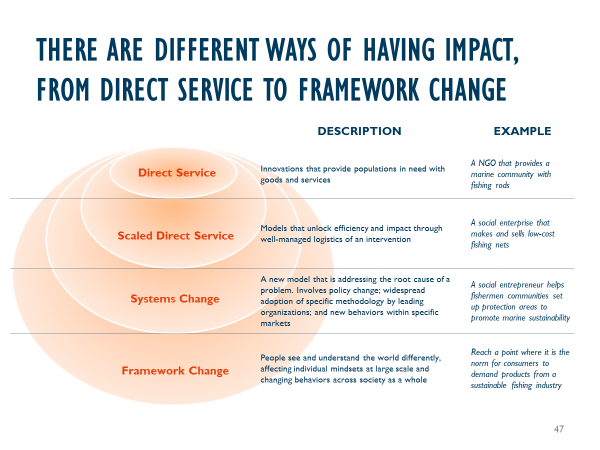
Returning to our question on whether the potential for good ideas to inspire more good ideas holds true and is it enough, we conclude that it is because it is stimulating the environment and context for all individuals to be problem solvers and changemakers. The journal challenges our academic and professional institutions to change not only the way they operate but the way they support young people and employees. People, despite their age or geographic location, need to know and feel what it means to co-lead teams and empower others to address a problem that they are experiencing. Peter Goldmark, former Publisher of the International Herald Tribune and former President of the Rockefeller Foundation once said, “Ashoka has shown how to invest successfully in pattern-breaking, powerful ideas and the people behind them -- and how to do so early when a little makes an enormous difference -- when hope can overcome cynicism, when tenacity can prevail over inertia. It has given us all the lessons in how to harness the most powerful energy in the world -- human talent -- to the task of adapting to the demands of the 21st century. We could not agree more.
Carol Sanford, in her most recent book: The Regenerative Business, agrees as she emphasizes that successful businesses today stop the practice of motivating people with incentives, rewards, and recognition, and shift to fostering initiative and self-management. She states that just important as technical skills, people need to develop a regenerative mindset defined by the fundamental characteristics of 1.) a desire to grow and improve, 2.) a motivation to engage and learn from others, and 3.) derive meaning from contributing to something larger than themselves.
We thank Diana Wells, Alessandro Valera, Sara Wilf, and Terry Donovan for the countless hours of curating and compiling their collective 40 years of experience, knowledge, and research into this edition which will be the driving force shaping how the global social sector approaches social innovation. We are inspired by Ashoka and because of their work we can imagine a world where Everyone is a Changemaker and where we all live in a Changemaker World.
We hope this edition will achieve our mission to inspire leaders and organizations to become changemakers; create the space for leaders to tap into their own creativity to innovate; empower leaders with the tools and knowledge to launch and grow their ideas; challenge leaders to become more empathetic; and transform everyone into a leader in a team of team’s world.
Yours in changemaking,
Nicholas Torres
Tine Hansen-Turton
SIJ Co-Founders -

Issue 51 | Greater Seattle's Social Innovation, Social Enterprises, and Public/Private Partnerships
No. 51 (2018)Dear Reader,
The Social Innovations Journal is driven by the belief that the potential for good ideas to inspire more good ideas cannot be underestimated. The value that social sector partnerships, entrepreneurs, and innovators bring to local communities and regions across the nation cannot be underestimated.
We believe one way to harness and advance this energy is through curating REGIONAL SOCIAL INNOVATION ECOSYSTEMS by sourcing/publishing regional social innovations, social enterprises, and public private partnerships. For this reason, The Social Innovations Journal has joined forces with Impact Hub Seattle, Client Accelerator for Conscious Entrepreneurs, Social Venture Partners Seattle, Seattle Impact Investing Group, City of Seattle Innovation and Performance, and Fledge to publish a Special Edition highlighting Greater Seattle’s SOCIAL INNOVATION, SOCIAL ENTERPRISES, AND PUBLIC/PRIVATE PARTNERSHIPS. This edition showcases Greater Seattle’s most innovative solutions to solve society’s toughest problems.
This issue holds special relevance related to how two cities can share knowledge as it comes on the heel’s of a symposium held last month that included an incredibly diverse group of 145 cross-sector Philadelphia leaders who traveled to Seattle for the Economy League’s Greater Philadelphia Leadership Exchange (aka “GPLEX”), to study how the Emerald City works, moves, lives, thrives -- and how it deals with major challenges. Seattle has incredible wealth and a political system and culture conducive to collaborating with other communities to solve public problems. We applaud Seattle’s collective work that together is developing a pragmatic approach that finds points of common ground and leverages assets to advance social impact.
Demonstrating the value of sharing good ideas to inspire more good ideas we look at some of the benefits provided to Philadelphia leaders.
“The coming together cements us, sharpens our ability to problem solve. The ROI is higher because we get to know Philly’s leadership, our collective self-reliance increases because we know our context.” – Beth Miller, Executive Director, Community Design Collaborative
“You know what’s the most important thing to me? Data. Data I did not have before. I am more informed.” – David Grasso, CEO Grasso Holdings
"I’ve walked away energized and determined to see how I can be part of the solutions that may enable us to apply some of the lessons observed into lessons learned and acted upon." – Michael Mittleman, President, Salus University
Read more in the introductory article by Jeff Hornstein of Greater Philadelphia Economy League and Vanessa Briggs of Brandywine Community Health Foundation.
Across the globe, and in Seattle, there has been a rapid rise in the number of social sector innovators and entrepreneurs who want to find innovative ways to solve or “move the needle” on society’s problems, and they are increasingly deploying the methods of business and private capital if that helps them to do so. They include people in the social sector who can now tap the markets for finance in addition to seeking grants from donors, and philanthropists who are willing to fund innovative ideas and businesses driven by social entrepreneurs and social sector organizations if they offer a greater likelihood of achieving the social impact they desire. The force capable of driving a social sector revolution is Seattle’s social innovation, enterprise, and partnerships that harness innovation, entrepreneurship, partnerships and capital to power social impact.
We hope this edition (article summaries are below) will achieve our mission to inspire leaders and organizations to dream; create the space for leaders to tap into their own creativity to innovate; endow leaders with the tools and knowledge to launch and grow their ideas; challengeleaders to become better versions of themselves; and transform leaders and their companies.
Yours in innovation,
Nicholas Torres
Tine Hansen-Turton
SIJ Co-Founders -

Issue 50 | Social Innovations in Community Empowerment for Health Across the Globe
No. 50 (2018)Dear Reader,
In coordination with The Network: Towards Unity for Health (The Network) 2018 Conference, we are excited to launch this edition titled “Social Innovations in Community Empowerment for Health Across the Globe.”
The Social Innovations Journal is driven by the belief that “the potential for good ideas to inspire more good ideas cannot be underestimated,” this aligns perfectly with The Network’s mission to foster equitable, community-oriented health services. Through education, research, and policies The Network is bringing together innovative health care organizations, educational institutions, and individuals from around the world in their shared commitment to improving the health of their respective communities.
The current need for innovation in community empowerment for health is evident, and though difficult, a path forward has been laid out. By creating spaces of encounter for academia, state, the private sector, and civil society the next steps towards more sustainable, innovative models and necessary policy adoptions are crystal clear.
Bill Burdick, Vice President for Education at FAIMER, captured the essence and importance of this edition by stating, “Empowerment implies listening and shared decision-making with an emphasis on communication and partnership, without which empowerment is not possible.”
We hope you read these articles (summarized below) to gain a greater sense of the promise of community empowerment for health initiatives across the globe. These articles cover topics including how community members are generating their own solutions to complex medical and psychosocial challenges; strategies for community-based participatory research; embracing cultural and ethnic diversity in mainstream health advances; developing strategies to create sustainable partnerships among university, local, and global communities to improve the health of populations through engagement and entrepreneurial collaboration; as well as strategies to adapt a government’s general practitioner system to meet the diverse and complex health needs of its communities.
We’d like to extend a special thank you to FAIMER for their collaboration on this edition and for providing access to the amazing individuals, initiatives, and ideas that will be presented at the 2018 TUFH Conference.
Sincerely,
Nicholas Torres
Tine Hansen-Turton
SIJ Co-FoundersWilliam Burdick
Vice President for Education
FAIMER -

Issue 49 | Social Innovation's Ecosystem in Mexico
No. 49 (2018)Dear Reader,
As we continue sharing the tools and knowledge of social innovations across the globe, we are honored to present this edition titled: Social Innovation’s Ecosystem in Mexico. We’d like to thank and recognize the Center for High Impact Social Innovation (CISAI) for their partnership that made this edition possible. CISAI, as with many international organizations, is the result of academic and research institutions joining forces with public institutions. CISAI seeks to contribute to social justice through social innovation and consolidation of the social innovation ecosystem. CISAI defines innovation within the context provided by Phills and Deiglmeier1 of the Stanford Business School as a novel solution to a social problem that is more effective, efficient, sustainable, or just than existing solutions and for which the value created accrues primarily to society as a whole rather than private individuals.
In this edition, the reader will find initiatives promoted by civil society organizations, social enterprises, start-ups, public agencies, and universities with a great diversity of topics. We encourage you to read the introduction article to this edition as it provides a macro context to the social innovations movement within Mexico.
In every developing social innovations ecosystem we find social innovators, those individuals, groups, collectives, start-ups, civic communities, that generate, share, and promote new ideas and ways of doing and thinking. These social innovators, despite institutional, policy, or societal barriers, continue to press for change on behalf of the greater society. Yet, many of these social innovators experience limited success because fertile ground for their ideas to take root doesn’t yet exist.
To facilitate greater progress, defined as more social innovation ideas taking root, regional leaders are investing in the development of ecosystems as they realize that working in isolation will not help social innovation take hold. The emerging theory, based upon our recent ecosystem publications, is that through investment in strong cross sector (government, private, not-for-profit) ecosystems, social innovation ideas find rich soil to grow. To accomplish cross sector ecosystem development regions are investing in the creation of communities where key players can network in person and utilize technology-connecting platforms. This trend recognizes the value of social innovators and is creating avenues for individuals to connect within all levels of public, private, and not-for-profit institutions. We witnessed this trend in the Asia edition and see it confirmed in the Mexico edition.
At the Social Innovations Journal, we believe the potential of good ideas to inspire more good ideas cannot be underestimated. As we attempted to focus this edition on Mexico’s social innovations we learned that every obstacle we encountered lost its power in the face of the irrepressible force of shared knowledge and ideas, and resulted, organically, with good ideas finding their own way to the surface to accomplish social impact and inspire more good ideas.
Yours in Innovation,
Nicholas Torres
Co-FounderTine Hansen-Turton
Co-Founder1 Phills Jr., Deiglmeier, Miller, Rediscovering Social Innovation, (Stanford Social Innovation Review, 2008)
-

Issue 48 | Parents as Consumers
No. 48 (2018)Dear Social Innovations Journal Reader,
The recently published book by Sondra Myers titled, “The People's Choice: Public Education and American Democracy,” makes it very clear that “public schools will educate nine out of 10 American students so there is no choice but to invest in them if we are to prepare informed and engaged citizens to shape the destiny of our nation.” As a journal focused on innovation, we urge all education stakeholders to work in partnership with parents to ensure that all of our children have their educational needs met.
This edition provides schools and educational institutions with a repository of ideas, models, and knowledge to both engage and partner with students’ parents and families. Hopefully, this edition inspires leaders of schools and educational institutions to engage parents as partners and educated consumers, as many consider family engagement the most critical component to a students' academic success.
Readers of this edition will better understand how students, parents, and educators can become partners in co-constructing the educational experience; the importance of community oversight in the delivery of services to students with special needs; the perspective of immigrant students in public education; the need for grief education in our schools to support our students and their families; how to effectively engage parents of students who are deaf or hearing impaired; how to cultivate social and intellectual capital; and how unwavering determination, perseverance, and courage are essential to overcoming odds and achieving success. Finally, this edition provides a snapshot of parent engagement innovations occurring internationally and nationally.
We hope as you read the articles (summaries below) you gain a sense of the promise and future of our evolving Educational Sector and the critical role parents fulfill in supporting the success of their children academically, socially, emotionally, and eventually, as contributors to society.
Sincerely,
Nicholas Torres
CEO/Co-Founder